
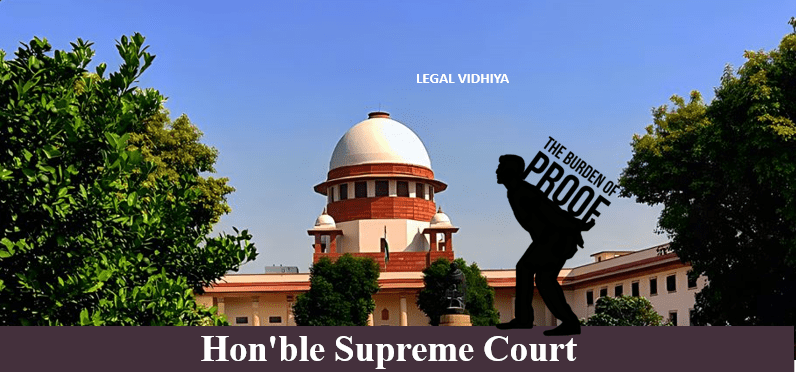
An appeal was filed before the Apex Court in the matter of Balvir Singh vs. State of Uttarakhand, opposing the High Court’s decision declaring the appellant’s husband guilty of both the crime of murder punishable by section 302 of the IPC and the crime punishable by section 498A of the IPC. The appeal was being heard by Justice J.B. Pardiwala and Justice Prashant Kumar Mishra.
In this instance, Balvir Singh was the husband of the deceased, Sudha. In accordance with section 156(3) of the Code of Criminal Procedure (Cr.P.C.), the father of the deceased, Virendra Singh, filed a request with the Court of Judicial Magistrate First Class asking for a directive to the police to file a first information report (FIR) in connection with the death of his daughter amid suspicious conditions. A FIR was eventually filed for the offence covered by sections 3 and 4 of the Dowry Prohibition Act, 1961, as well as sections 302 and 498A of the IPC as read with section 34 of the Indian Penal Code (IPC). Defendants were found guilty of these offences by the Trial Court. The conviction was upheld by the High Court.
The Supreme Court stated that section 106 cannot be used to compensate for the prosecution’s failure to present evidence of events that led to the accused’s guilt.
If the prosecution has not met its burden of proof by demonstrating each element required to establish the offense, this clause cannot be utilised to sustain a conviction.
Even though it is a thing that the accused was specifically aware of, it does not relieve the prosecution of its obligation to prove that a crime was committed, and it also does not shift the burden of proof onto the accused to establish innocence. Therefore, until such evidence establishes a prima facie matter, the onus of burden of proof does not shift to the accused.
The Supreme Court cited the matter of Deonandan Mishra v. The State of Bihar, where it explained that section 106 under a criminal trial does not impose a burden on the accused but that in cases where the accused fails to shed any light at all on facts that should be especially in his purview and knowledge and that might back any hypothesis in keeping with his presumed innocence.
Written by: Divyani Newar
College name: NEF Law College
5th Semester, 3 Year LL.B.
An intern under Legal Vidhiya




0 Comments