
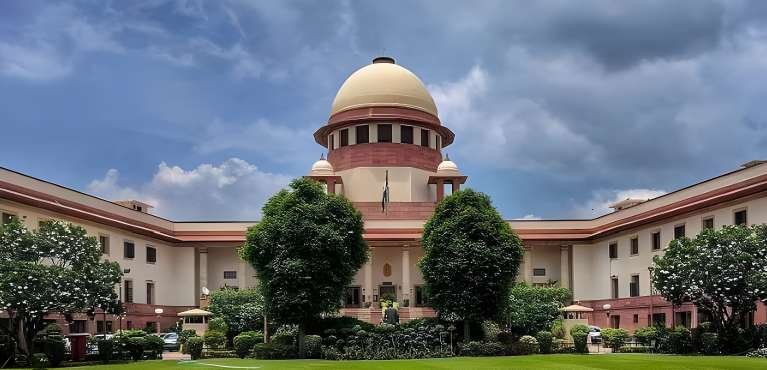
Recently, the Supreme Court of India has ruled that disciplinary proceedings can only be considered initiated after the chargesheet has been served, and not upon the issuance of a show-cause notice as was previously believed. This ruling was made in the case of United Commercial Bank Officer, Employees (Discipline and Appeal) Regulations 1976 when a former bank officer of UCO Bank faced disciplinary action even after reaching the age of superannuation.
The Court referred to its previous rulings in UCO Bank v. Rajender Lal Capoor (2007) 6 SCC 694 (Rajender Lal Capoor -I), Rajendra Lal Capoor-II, and Canara Bank v. D.R.P. Sundharam, (2016) 12 SCC 724, which stated that the regulations (The United Commercial Bank Officer, Employees (Discipline and Appeal) Regulations, 1976) could only be invoked if disciplinary proceedings had already been initiated before the employee’s service ended.
As per the ruling, disciplinary proceedings would only be considered initiated when the chargesheet was issued, not merely upon the issuance of a show-cause notice. In Rajender Lal Capoor -I’s case, it was held that “the departmental proceeding was not initiated merely on the issuance of a show cause notice. It only starts after a chargesheet is published.
The Supreme Court bench comprising Justices Hima Kohli and Justice Rajesh Bindal heard an appeal against a judgment of the Bombay High Court that had allowed the appeal of the retired bank employee and overturned his dismissal from service. The respondent had served as the Assistant General Manager at Bombay Main Branch and was scheduled to retire on 31.07.1991.
On June 17, 1991, he received a message requesting an explanation for alleged irregularities and oversights involving certain accounts while he was in charge of the Bombay Main Branch. On 15.07.1991, the General Manager (Personnel) used his authority under Regulation 12 of the 1976 Regulations to place him under suspension. He filed an appeal against the suspension, but both the appellate body and the High Court rejected it. The Disciplinary Authority later terminated his employment on March 3, 1993, in accordance with Regulations 7(3) and 4(d) of the 1976 Regulations.
He responded by filing a statutory appeal, which the Appellate Authority dismissed. He then filed an appeal with the Supreme Court, which upheld the employee’s position and overturned the employee’s termination from service. The Appellant Bank petitioned the Supreme Court after being outraged by this ruling.
In UCO Bank v. M.B. Motwani(Dead) Thr LRs, the court referred to the United Bank of India Regulations 1979 and noted that Regulation 20, which was identical to the regulations involved in the present case, had previously been held to be unconstitutional and void in the United Bank of India Officers Association’s case. However, the same case was later reviewed and decided again in Rajinder Lal Capoor –II.
The court clarified that Clause (iii) of Sub-Regulation 20(3) of the 1979 Regulations is a separate provision that allows for the continuation of disciplinary proceedings, but only if they have been initiated as per the 1976 Regulations.
Moreover, the court explained that the complete procedure for holding disciplinary proceedings is provided only in the 1976 Regulations. The 1979 Regulations are applicable only when no disciplinary proceeding is to be initiated. However, when interpreted in light of Regulation 20(3), it becomes imperative to initiate and maintain disciplinary proceedings.The 1976 Regulations provide for the mode and manner in which the disciplinary proceeding is initiated. It expressly provides for the service of a charge sheet, which is a necessary condition for disciplinary proceedings.
The court rejected the appeal filed by the appellant-Bank as it found no merit in it. The principles that were followed in this case have already been consistently laid down. The bank officer had reached superannuation on 31.07.1991, while the charge sheet was issued on 07.12.1991. Therefore, no disciplinary proceedings were pending against him at the time of his superannuation. The court held that the appeal filed by the appellant-Bank was meritless and ordered them to pay costs of ₹25,000/-.
Additionally, the court set aside the punishment order inflicted on the deceased employee and ordered that all the service benefits due to the employee, along with interest at 7% per heirs legally entitled to get it within three months from the date of his retirement until the payment is made, shall be paid by the appellant-Bank to them.
Written by N.Yogendra Mani of KL University Vijayawada Andhra Pradesh ( 5th semester) an intern under Legal Vidhiya





0 Comments