
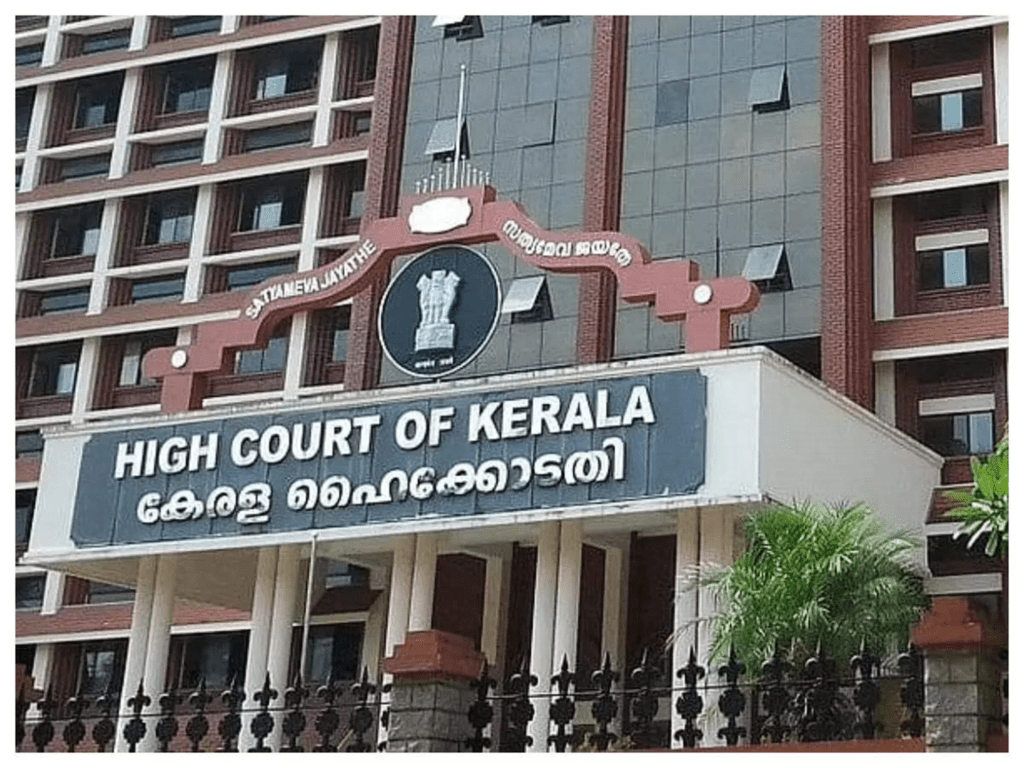
In a special emergency session held today, the Kerala High Court strongly criticized the State and Police authorities for their inability to prevent the brutal murder of a 23-year-old house surgeon. The young doctor, who was repeatedly stabbed by an injured individual brought to the government hospital in a police jeep, tragically lost her life in the early hours of the morning.
Expressing their dismay, a Division Bench composed of Justice Devan Ramachandran and Justice Kauser Edappagath, orally remarked, “If doctors can’t be protected, shut down all hospitals.” The court strongly criticized the police for their failure to fulfill their duty of protecting the young female doctor. The court expressed that the police had let down the girl, highlighting the fact that a man was able to harm her despite being under police custody. The court emphasized that it was expected of the police to maintain constant vigilance in such cases.
RECENT EVENTS
In a distressing incident, a house surgeon, aged 23, was reportedly stabbed multiple times by Sandeep, a school teacher. The assailant, who was already under police custody, was taken to Kottarakkara Taluk Hospital for medical attention regarding his own injuries. However, during his treatment, he suddenly became aggressive and used dressing room scissors to stab the young doctor. This appalling event prompted the High Court to convene a special session on the case, as it had previously issued instructions to safeguard doctors and hospital personnel against assaults by the public.
In its observation, it was further noted by the Court that when the perpetrator was apprehended, abnormal behavior was exhibited, and it was expected that the police would have been vigilant and such an incident should have been anticipated:
The intervention by the police should have occurred the moment abnormal behavior was displayed. Foolproof measures should have been taken by the security systems. Restraint should have been applied to him. The understanding and anticipation of the unforeseen are essential aspects of policing. Otherwise, your presence becomes unnecessary. Isn’t it the primary responsibility to ensure that the law is not violated?
In addition, the Court expressed the need for a protocol to be established regarding the presentation of accused individuals before doctors, similar to the existing protocol followed for Magistrates:
The Court raised the question of the protocol employed when presenting accused individuals before Magistrates, which currently involves numerous cases being presented, even during nighttime. The Court questioned why such protocols are not adhered to when presenting them before doctors. It emphasized the importance of doctors, as they play a crucial role in the justice system. Consequently, the Court called for the implementation of the same protocol used in other instances to be extended to doctors as well.
Justice Ramachandran emphasized that leaving a patient of this nature alone with a doctor is a certain recipe for disaster. The notion of having the police standing outside when the patient is brought before a female doctor is also a recipe for disaster, according to him.
Regarding the unfortunate incident, the Court expressed its deepest condolences to the victim’s family and friends. They highlighted the anguish of the parents who sent their daughter to the hospital with the intention of serving, only to receive her lifeless body in a coffin. The Court acknowledged that this is the worst nightmare come true and questioned whether such incidents have occurred in other countries before, or if this is a first for us.
The Court has scheduled further consideration of the matter for tomorrow. They have instructed the State Police Chief to submit a report by tomorrow morning.
During the order dictation, the Court emphasized the importance of preserving CCTV footage from the areas where the incident occurred. They stated that the Superintendent of the Hospital will be held personally accountable if any tampering with the footage is discovered. Additionally, the Court requested JFCM Kottarakkara to visit the Taluk Hospital, conduct a physical inspection of the scene, and provide a report to the Court by tomorrow.
In this case, the Court’s observation was that every order passed shall be applicable to interns, students, and all individuals in the medical field, without any exceptions. However, the Court allowed the state to request modifications to this directive.
Sr. Adv. Gopakumaran Nair, appearing on behalf of IMA, conveyed to the Court that the entire medical community was profoundly disturbed by the incident. He asserted, “Our organization is in a state of shock. There is absolutely no justification for such an incident. If this does not constitute a failure of policing, then what does?”
The Court remarked that such an incident would deter people from pursuing a career in the medical profession due to concerns about safety.
The Court raised a concern, asking how it is possible for young girls to be house surgeons and work during nighttime at present. Additionally, the Court recognized that doctors had initiated a strike that even the Court couldn’t stop. The Court emphasized the extensive difficulties experienced by numerous individuals due to these situations. Previously, the Court had urged the government to propose suggestions, including potential legislative measures, to combat attacks on medical personnel. Following that, the Court received information from the government indicating its contemplation of making amendments to the Kerala Healthcare Service Persons and Healthcare Service Institutions (Prevention of Violence and Damage to Property) Act of 2012.
Written by – Sohini Chakraborty intern under Legal Vidhiya





0 Comments