
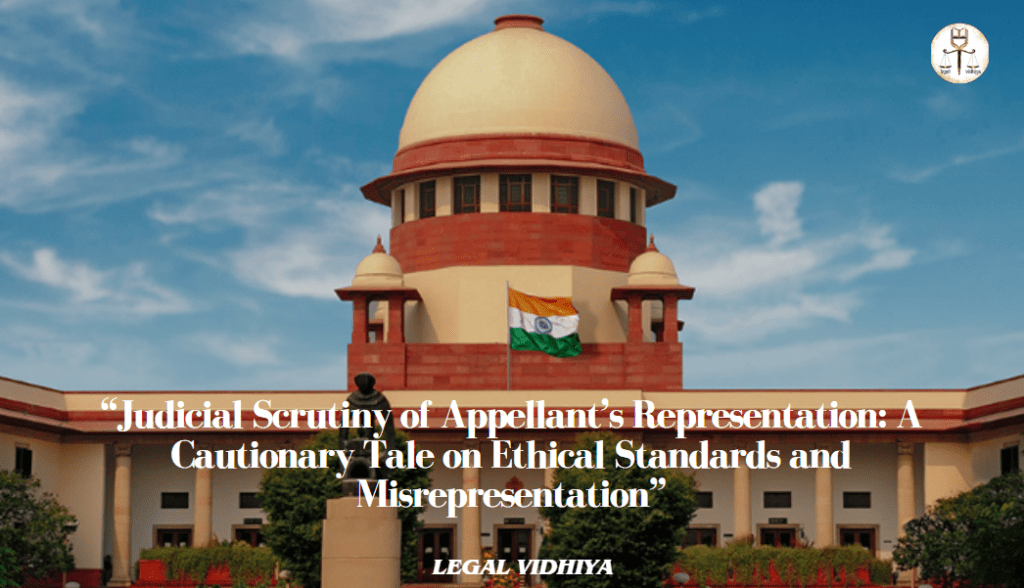
In this legal matter, the appellant challenges the High Court’s denial of bail in connection with charges under the IPC and the Prevention of Money Laundering Act. The appellant asserts that scheduled offenses were dropped from the Chargesheet filed by the Investigating Officer, arguing a lack of merit in the High Court’s decision.
However, a crucial development arises as the Supreme Court questions the authenticity of documents submitted during the appeal. The appellant, through an affidavit, failed to clarify whether the Chargesheet was presented before the High Court. The court highlights the violation of rules governing Special Leave Petitions, emphasizing that pleadings and arguments should be confined to the materials before the lower court.
The court expresses concern over a potential misrepresentation of facts, questioning the integrity of the Certificate and Affidavit submitted by the appellant’s representatives. It criticizes the appellant’s legal team for not verifying the obvious absence of the Chargesheet and Cognizance order during the High Court proceedings.
Ultimately, the court underscores the ethical responsibility of advocates, particularly senior advocates, to ensure accurate and complete disclosure of facts. It emphasizes the need for a high standard of professionalism in legal practice, urging lawyers to diligently verify information and maintain integrity in the pursuit of justice.
In conclusion, the judgment highlights a serious lapse in the appellant’s legal representation. The court expresses skepticism about the authenticity of documents submitted during the appeal, particularly the Chargesheet and Cognizance order that were not part of the lower court proceedings. The court criticizes the appellant’s legal team for attempting to challenge the High Court’s decision based on non-existent documents.
Furthermore, the judgment underscores the importance of adhering to legal rules, particularly in Special Leave Petitions, where arguments should be confined to materials presented before the lower court. The court emphasizes the duty of advocates, especially senior advocates, to uphold a high standard of professionalism, insisting on accurate and complete disclosure of facts.
Ultimately, the judgment suggests that the appellant’s legal representatives may have made a bold attempt to misrepresent facts, casting doubt on the integrity of the Certificate and Affidavit submitted. The court reaffirms the expectation that parties seeking justice should provide truthful information and that advocates play a crucial role in assisting the court fairly.
In essence, the judgment underscores the need for ethical conduct in legal practice and raises concerns about attempts to manipulate the legal process through the submission of questionable documents.
AREEBA , LLYOD LAW COLLEGE, First Year Legal Journalism Intern at Legal Vidhiya.
Disclaimer: The materials provided herein are intended solely for informational purposes. Accessing or using the site or the materials does not establish an attorney-client relationship. The information presented on this site is not to be construed as legal or professional advice, and it should not be relied upon for such purposes or used as a substitute for advice from a licensed attorney in your state. Additionally, the viewpoint presented by the author is of a personal nature.





0 Comments