
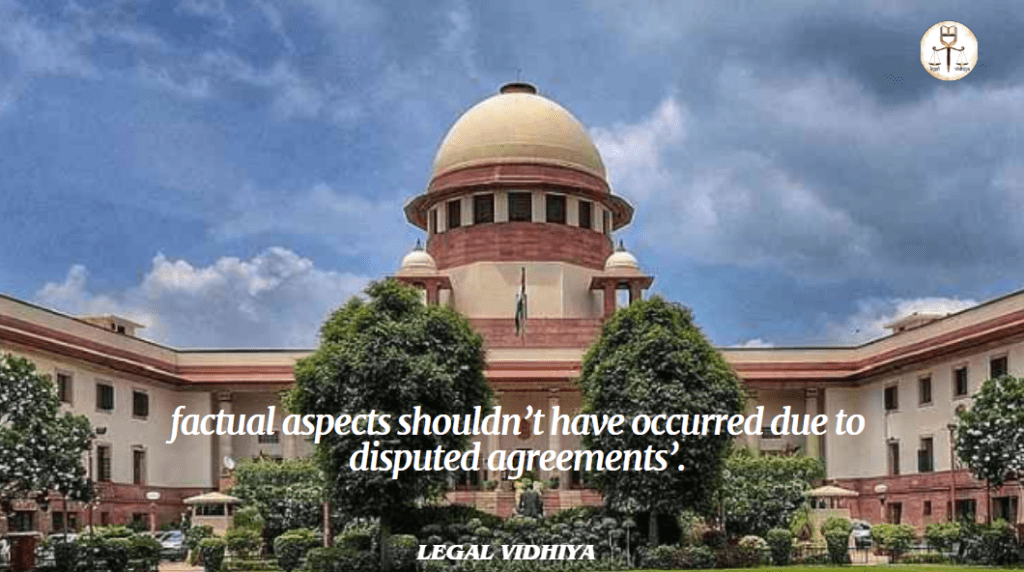
In this case the court reviewed the judgment by the High Court of Gujarat on the quashing of a criminal case involving Geetanjali Jewellery Retail Limited. It highlighted that the detailed examination by the High Court on factual aspects shouldn’t have occurred due to disputed agreements’ validity between Geetanjali and the private respondents. The appellant argued the agreements were binding and presented documents supporting this claim, emphasizing a fiduciary deposit of 24 karat gold bars. The private respondents contested the authority of signatories but didn’t dispute their signatures. The court refrained from delving into penal code sections, emphasizing the need to establish facts, especially regarding the deposit’s nature.
The court acknowledged the private respondent’s claim about contradictions in the appellant’s notices of breach of contract and emphasized that such inconsistencies should be examined during the investigation. It highlighted the distinction between civil wrongs and criminal offenses, stating that fulfilling the criteria of a criminal offense is crucial. While considering the appellant’s contentions and allegations in a comprehensive manner, the court refrained from making detailed observations. Additionally, the court mentioned that the appellant’s failure to account for and remit the sale proceeds as per the operational and commercial agreement was acknowledged and accepted in the impugned judgment.
The appellant, Digvijaysinh Himmatsinh Jadeja, challenged the court’s rationale, stressing that the high Court disregarded a particular clause in the 13.08.2013 agreement, which didn’t nullify the fiduciary relationship concerning the gold bars. The court observed that the High Court’s analysis and decision on contentious facts to dismiss the FIR were unsuitable. It was noted that investigations had started subsequent to the FIR filing, incorporating statements recorded under Sections 161 and 164 of the Criminal Procedure Code.
The court acknowledged a specific reference to respondent Priti Mehul Choksi in the impugned judgment but refrained from making any comments, indicating that specific roles attributed to her could only be determined through investigation. Consequently, the impugned judgment was set aside, and the appeal was allowed. The court clarified that its observations shouldn’t be construed as comments on
the case’s merits, emphasizing that the investigation should proceed without influence from the court’s findings or the prior judgment. Additionally, it directed the investigating officers to consider relevant legal interpretations while investigating Sections 406, 420, 464, and 465 of the Indian Penal Code. Lastly, any pending applications were to be disposed of accordingly.
Justice SANJIV KHANNA and justice S.V.N. BHATTI presided over this case. CRIMINAL APPEAL NO.3259/2023
Reference – the official website of Supreme Court
Written by Samruddhi Kulkarni from ILS Law College pune (BA.LL.B) Semester , intern under legal vidhiya.
Disclaimer: The materials provided herein are intended solely for informational purposes. Accessing or using the site or the materials does not establish an attorney-client relationship. The information presented on this site is not to be construed as legal or professional advice, and it should not be relied upon for such purposes or used as a substitute for advice from a licensed attorney in your state. Additionally, the viewpoint presented by the author is of a personal nature.





0 Comments