
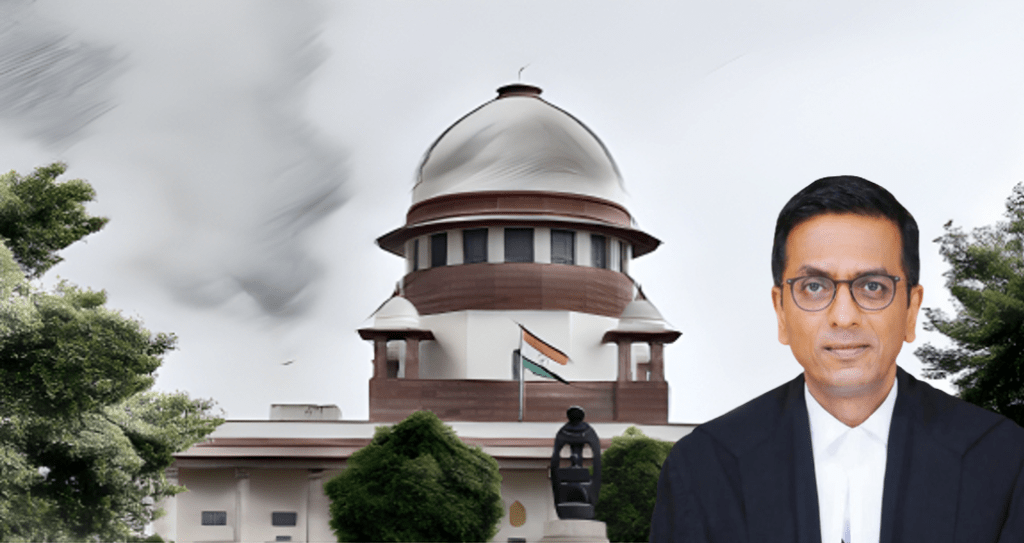
Justice D.Y.Chandrachud orally remarked that the apex court has been working towards making the court proceedings available in the regional language on an administrative side. This remark was made during the hearing of marriage equality proceedings. Regional language is a language that is spoken by a sizeable number of people but not the language of communication for the rest of the country. Besides Sanskrit they include 21 modern languages, Assamese, Bangla, Bodo, Dogri, Gujarati, Hindi, Kashmiri, Kannada, Konkani, Maithili, Malayalam, Manipuri, Marathi, Nepali, Oriya, Punjabi, Tamil, Telugu, Santali, Sindhi, and Urdu.
The CJI remarked that the live streaming proceedings had taken the Supreme court to the hearts and homes of common citizens. Justice Dwivedi was quick to point out that the language problem is complex in India. He said that the people in villages and small towns won’t be able to understand and follow the same, to which the CJI responded that they are also working to ensure the live streaming in all languages.
The three-judge bench of the supreme court allowed live streaming of the hearings except sensitive matters on September 26, 2018. However, the apex court started the live proceedings from 2022. On 21st February 2023 the court also started the first project to transcribe the live proceedings using Artificial intelligence. Justice D.Y.Chandrachud said that they will have a permanent record of arguments which not only helps the judges and lawyers but also the law colleges, it is a huge resource, and they can analyse how matters are argued. The transcribing will serve as the second major decision towards the making of a more transparent court. They are using the platform teres, run by nomology technology private limited, which is a Bengaluru based company. They have personal who clear up the errors by evening if there are two or more voices at a time.
written by – Krishnapriya intern under legal vidhiya




0 Comments