
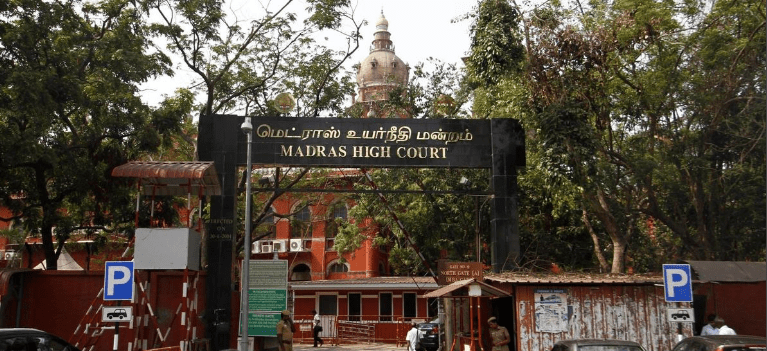
In a significant decision, the Madras High Court stated on Monday that it would be “abundantly clear that pedigree based on caste will have no role to play in the appointment of Archaka (temple priest)” if the candidate was knowledgeable, properly trained, and fully qualified to perform pujas and other rituals in accordance with the requirements of the Agama Sastra applicable to the temple in question.
The appointment of an Archaka to a temple would be a secular duty, according to Justice N. Anand Venkatesh, who noted that the Supreme Court had determined in Seshammal & others versus State of Tamil Nadu (1972) that only the performance of religious service by those priests would constitute an intrinsic component of the religion. The supreme court made a distinction between a secular and religious function in that decision.
He also cited the Supreme Court decision in N. Adithayan versus Travancore Devaswom Board from 2002, which rejected the traditional assumption that only Brahmins, specifically Malayala Brahmins, were capable of performing rituals. The court decided that any trained individual qualified to do the puja in a proper manner could carry out the ceremonies.
“If traditionally or conventionally, in any temple, all along a Brahman alone was conducting pujas, it may not be because a person other than the Brahman is prohibited, but because those others were not in a position and, as a matter of fact, were prohibited from learning, reciting or mastering Vedic literature, rites or performance of rituals and wearing sacred thread by getting initiated into the order,” the supreme court had declared.
Justice Venkatesh cited the Supreme Court and continued, “This is a further reiteration of the principle that the Archaka falls under the secular part.” Along with N.R.R. Arun Natarajan, he also concurred that the temple trustees or Fit Persons nominated by the Hindu Religious and Charitable Endowments Department could proceed with the appointment of Archakas to temples where the Agama to be followed was clear.
The judge ruled that no Archaka positions could remain unfilled until a committee, chaired by retired judge M. Chockalingam, was established by a Division Bench of the High Court in 2022 to identify the Agamic and non-Agamic temples in the State. He also noted the SGP’s argument that the committee’s charter was later contested and that, as a result of an interim stay issued by the court in February of this year, it had ceased operations.
As a result, the judge decided that the appointments could go on in keeping with established Agamic practises. Since Muthu Subramania Gurukal had filed a writ petition before him regarding appointments at the Karana Agama-practicing Sri Sugavaneswarar Swamy Temple in Salem, the judge approved the appointments there as well and allowed the petitioner to take part in the hiring process.
Written By- Aditya Singh, College Name- Army Law College, Pune, Semester- 2nd Semester Student an intern under Legal Vidhya




0 Comments