
Keywords: Enforcement Directorate, Money laundering case, Habeas corpus petition, Custody of arrested, Split verdict.
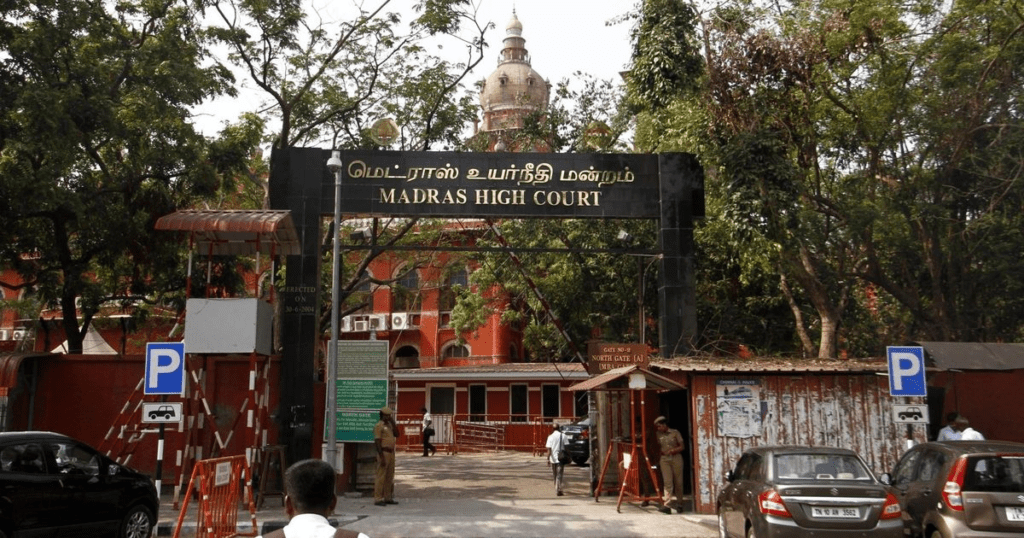
The Madras High Court has denied the release of V Senthil Balaji, a minister from the Dravida Munnetra Kazhagam (DMK) party, who was arrested by the Enforcement Directorate (ED) last month in a money laundering case.
The decision was made in response to a habeas corpus petition filed by Balaji’s wife seeking his release.
Justice Karthikeyan remarked that if the arrest and remand are legally conducted, he has to agree with Justice Chakravarthy’s view that although the habeas corpus petition was maintainable, it could not be granted.
The judge’s order emphasized that if the investigation requires custody, it should be granted as a right and no accused can obstruct the inquiry process. The judge disregarded the accused’s claims that he was not intimated about the grounds for his arrest. When an arrest is feasible, it is also permissible to seek custody.
The judge directed the Registry to present the case before the Chief Justice’s bench to obtain a final decision. The judge also considered the Supreme Court’s verdict in the Y Balaji v. Karthik Desai case, where the apex court refused to release Balaji in the cash-for-jobs scam earlier this year in May. The judge noted that this judgment directly influenced the proceedings initiated by the ED.
The court pointed out the different powers vested in the ED and determined that the plea for the release of Balaji should be rejected.
The issue arose due to concerns raised about the impact of Balaji’s arrest and detention on his well-being.
The judge considered the argument that he was not informed about the reasons for his arrest, thereby infringing upon his Constitutional rights.
However, the judge upheld the ED’s contention that Balaji was not cooperative, threatened officials, and refused to sign the memorandum mentioning the grounds for his arrest.
The judge stated that since the authorities had been present at Balaji’s residence since June 13, he should have been aware of the reasons behind it. In light of this, he cannot claim innocence in the matter. The judge further emphasized that if the reasons for granting remand outweigh the objections against it, then remand must be granted.
The case stems from purported irregularities in the recruitment of bus conductors, drivers and junior engineers during his tenure as the Transport Minister in the AIADMK government, spanning from 2011 to 2015.
Balaji was placed under judicial custody after his remand by a Sessions court but was later transferred to a private hospital for bypass surgery, post which his wife sought his release.
Last month, the division bench of the HC issued a split verdict stating that a habeas corpus petition remains valid even if a remand order has been issued by a magistrate, provided there is clear evidence demonstrating that the arrest was unlawful or in violation of established legal principles.
Two judges of the bench- Justices Nisha Banu and D Bharatha Chakravarthy, concurred on the maintainability aspect but held divergent views regarding the powers of the ED to seek custody of an arrested.
Justice Banu concluded that the ED’s arrest of the minister was unlawful, whereas Justice Chakravarthy disagreed. Thus, The habeas corpus petition was not maintainable.
Following the pronouncement of their individual orders, Justice Banu instructed the Registry to present the case to the Chief Justice for further instructions.
After hearing arguments presented throughout the week, Justice Karthikeyan delivered his judgment in an open court today.
References:
- Bar and Bench, https://www.barandbench.com/news/litigation/madras-high-court-tie-breaker-judge-rules-against-release-senthil-balaji, accessed 14 July 2023.
By: Saatvik, BBA LL.B. (Hons.), upcoming law student at Vivekananda Institute of Professional Studies, GGSIPU, Delhi, an intern under Legal Vidhiya.





0 Comments