
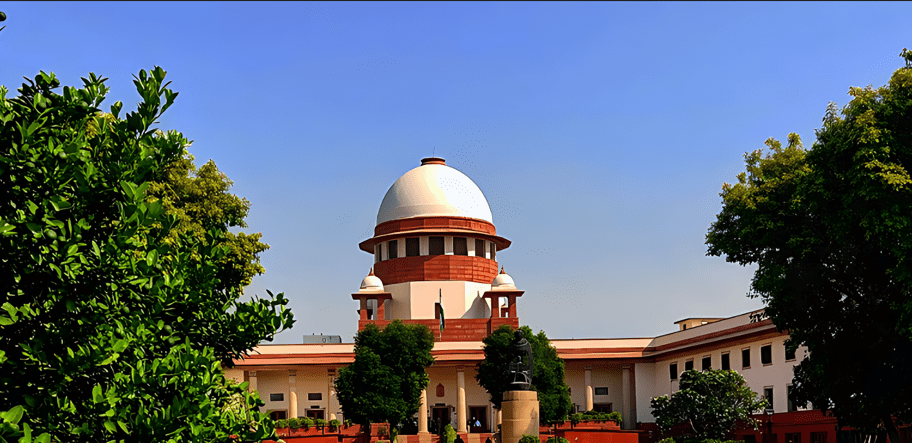
During the hearing of article 370 case before Supreme Courts five judge constitutional bench comprising the Chief Justice of India- DYChandrachud and judges BR Gavai, Surya Kant, Sanjay Kishan Kaul and Sanjeev Khanna, the senior advocate Kapil Sibal questioned the constitutionality of the bifurcation of the erstwhile state of Jammu and Kashmir into union territories.
The Supreme Court of India had begun the hearing on plea petitions challenging the abrogation of article 370 of the Indian constitution that granted special status to the state of Jammu and Kashmir and also converted the state into a union territory.
Kapil Sibal further questioned the power vested in the central government to downgrade a state into union territories without consulting the people. He stated that those were the constitutional parameters to be applied before
exercising the majoritarian power on such momentous change.
Through his arguments, Kapil Sibal highlighted that the power provided by the article 3 of the Indian constitution for the reorganization of state, does not extend to change the character of a state. The values of the constitution like federalism, separation of powers, democracy are to be taken in account while exercising such an act. He added that if this is permitted then it would be bound to happen to other states of our country.
‘You can carve a union territory out of a state but it does not allow the extinguishment of a state. You can carve out a union territory if you have two or more states come together. But you can’t create two union territories in a state. Essentially, there are two aspects to that. The text of the constitution doesn’t allow you to do what the fundamental of constitutional democracy do not allow. Otherwise this power can be exercised anytime’ Argued the senior advocate Kapil Sibal.
Written by: Abhirami Sudheer, Elayadath College: Government Law, College, Kozhikode, Kerala , Semester: 4th semester of 3 year LLB a intern under Legal Vidhiya




0 Comments