
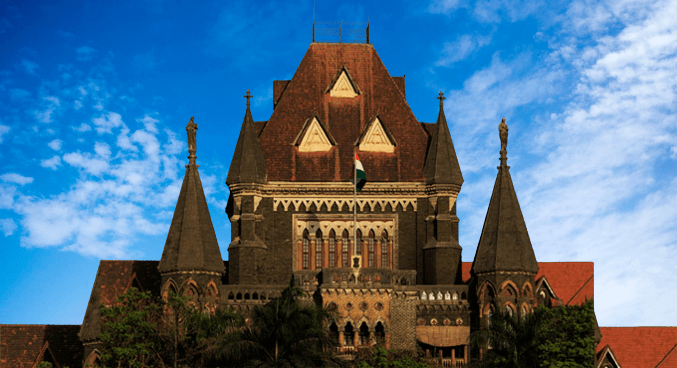
On 5th of march 2023, justices Sunil Shukre and MM Sathaye dismissed the FIR against Avijit Michael for messaging IAS officer Ashwini Bhide in 2018 regarding the cutting down of the trees at the Aarey Colony for the metro 3 car shed.
Mumbai police booked the petitioner who was a green activist alleging harassment over messages sent to the IAS. The FIR was filed at the Bandra-Kurla Complex police station.
The division bench remarked that there was nothing “offensive” about the messages sent and the accused only seemed concerned about the forest and to him the forest appears to be acting like a pair of lungs for the city of Mumbai, it was also noted by the justices that the accused was only trying to assert his democratic rights.
No matter how high is the position of the complainant, a case registered against a virtual protester would be considered invasion upon the rights of citizens, the bench further stated.
Th court further reprimanded the police against registering any similar cases. The police were cautioned by the bench that, registering a case similar to the one invoked here, against an ordinary citizen of the country under criminal law would be equivalent to repressing his voice against what he considers to be unjust.
The bench stated that the allegations made in the FIR when considered at their face-value do not in any manner constitute the offences punishable under section 186 of the IPC and when as accepted as they are, do not indicate commission of any offences as anticipated under sections 43(f) and 66 of the Information Technology Act, 2000.
For any offence to be bookable under section 186 of the IPC, it is necessary to voluntarily obstruct a public servant in discharge of his public functions and such obstructions must have direct relation with the discharge of public functions of such public servant. For this offence the public servant has to willingly come forward and allege the obstruction.
In the present case, the alleged obstruction was caused to Smt. Ashvini Bhide is a public servant. She is a member of the Indian Administrative Services, who was working as a Managing Director of Mumbai Metro Rail Corporation (MMRC) at the relevant time.
According to respondent 2, certain messages were received by Smt Ashwini Bhide on her cell phone which offended her and obstructed in discharge of her official functions. After this she blocked the number from which she had received the messages earlier, and even after blocking the number Smt. Ashwini Bhide yet again received another such message.
However, respondent 2 has not stated anywhere in his FIR that Smt Ashwini Bhide directly communicated about the said offence. There is no record which attests that Smt Ashwini Bhide had written to the complainant and informed him about the alleged obstruction.
It was also noted by the court that the alleged offensive messages when examined as they are without adding anything thereto or subtracting anything therefrom, do not verify that the sent messages were intended to offend or obstruct Smt Ashwini Bhide rather at the surface it seemed that the sender of the message had the intention to preserve the trees in the large interest off the society. It was very evident that the sender of the messages, who was the petitioner currently, had acted in a bona-fide manner on the basis of what he believes to be essential.
The court believed that the sent messages were not offensive, and rather they had been sent in assertion of democratic right of the citizen of this country to put forth their opinion.
In regards to the offences that are remaining, it was found that by no stretch of imagination any offence bookable under section 43(f) and 66 of the IT Act can be seen in the present case.
By this the court concluded that there are no offences that had been disclosed against the petitioner, and hence the petition is allowed and the FIR registered at the Bandra-Kurla Complex police station, on 18th of January 2018 is quashed and set aside.
Written by: Pranjal Jha, 2nd Semester, Amity Law School, Noida.


0 Comments