
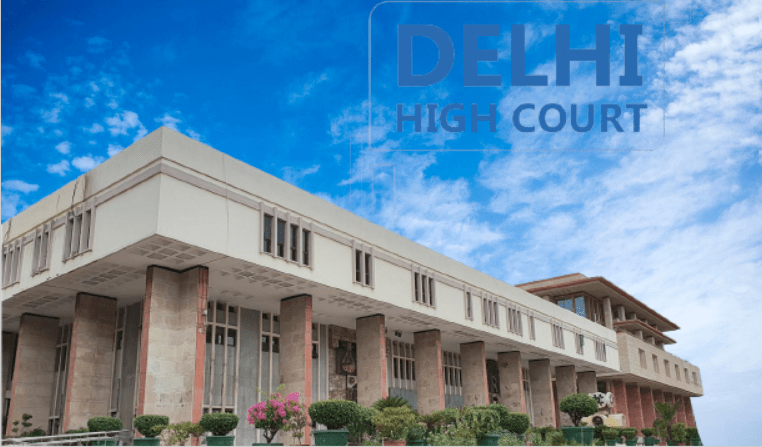
The Delhi High Court has ruled that no investigation into the actual area of practice as an advocate is necessary in order to meet the requirement of seven years of continuous practice as an advocate in order to be appointed as a District Judge, as stated in Rule 9(2) of the Delhi Higher Judicial Services (DHJS) Rules, 1970 or Article 233(2) of the Constitution of India.
“Unless it is established that he was not entitled for being so enrolled as an advocate; had suspended his practice either voluntarily or otherwise; or had accepted an engagement or vocation, which was impermissible as a lawyer, a person who has been enrolled as an advocate for a period of seven years prior to the date of the application would satisfy the eligibility criteria.
The bench declared that the practice of law has grown significantly and is no longer limited to appearing in court or making arguments.
The preparation of submissions, the drafting of regulatory files, representation before various tribunals or authorities, assistance with regulatory compliance, and other activities are just a few of the many dimensions of the legal profession.
In addition to the qualifying requirements outlined in Article 233(2) of the Constitution, the court further stated that Rule 9(2) of the DHJS Regulations does not take the requirement of actively practising as an advocate into consideration. It continued by saying that there is no distinction between someone who has practiced as an advocate and someone who is one.
The selection of a candidate for the Delhi Higher Judiciary Services (DHJS) was being challenged in a writ petition on the grounds that the time he spent pursuing a full-time master’s degree in law could not be regarded as time spent in active practice as an advocate. The division bench of Justice Vibhu Bakhru and Justice Amit Mahajan was hearing the case.
Referring to Resolution No. 160/2009 of the Bar Council of India (BCI), which permits practising solicitors to enroll in an LL.M. programme as regular students without stopping their legal work, the court stated that because the candidate’s legal work was not suspended during the specified time, he did not fail the requirements for being appointed in the position.
By contesting the inclusion of respondent no. 5 on the list of candidates, petitioner Karan Antil sought guidance from the court in his writ suit in order to be appointed to the DHJS.
who was chosen for a position in the DHJS.
In the sequence of merit, Antil, who took the DHJS Test in 2022, was assigned serial number 35. He argued that Rule 9(2) of the DHJS Regulations’ requirement that candidates “had been continuously practicing as an Advocate for not less than seven years as on the last date of receipt of the application” was not met by the fifth respondent, who was therefore ineligible to stand for the DHJSE-22.
Antil argued that respondent no. 5 did not meet the requirements since he attended University College London (UCL) from September 23, 2015, to June 6, 2016, for the Master of Law programme. He argued that the time spent working towards a full-time master’s degree in law cannot be viewed as time spent actively working as an advocate. Respondent No. 5 was not appearing or pleading as an advocate in a court of law during the relevant period, hence he could not be said to be in practice, according to Antil.
He further stated that getting a Master’s degree in law could not be taken into consideration because it depends on the functions that a person does to determine whether they are in practice.
Furthermore, it was argued that Rule 9 of the DHJS Regulations and Article 233(2) of the Constitution use different language.
“A person must have been an advocate or a pleader for at least seven years in order to be qualified to be appointed as a district judge, according to Article 233(2) of the Indian Constitution.
However, Rule 9 of the DHJS Regulations stipulates that the applicant must have been actively engaged in advocacy for at least seven years as of the last date the application was received “It was contested.
The court noted that becoming an advocate and receiving a certificate are equivalent to a person practicing law.
The court rejected the petitioner’s arguments, noting that there was no appreciable distinction between the requirements for becoming an advocate under Article 233(2) of the Constitution and Rule 9(2) of the DHJS Regulations.
According to Article 233(2) of the Indian Constitution, anyone who has practiced law for at least seven years is qualified to be appointed as a district judge. It goes without saying that the term “advocate” refers to a person who works as an advocate. The court stated, “We are not persuaded to agree that there is a distinction between a person who is an advocate and a person who has practiced as an advocate.
The bench also cited Resolution No. 160/2009 of the Bar Council of India, which allows practicing solicitors to enroll in an LL.M. programme as a regular student without having to stop their practice.
In light of this, the court determined that respondent no. 5’s legal practise was not halted while he was enrolled in the Master of Law programme. The bench stated that he was not forced to suspend his enrollment as an advocate because he was enrolled in the aforementioned full-time course due to Resolution No. 160/2009 passed by the BCI.
SRISHTI BHARDWAJ, B.COM LL.B




0 Comments