
KEYWORDS: Last Rites, 94 unclaimed bodies, Law and order, Necessary actions
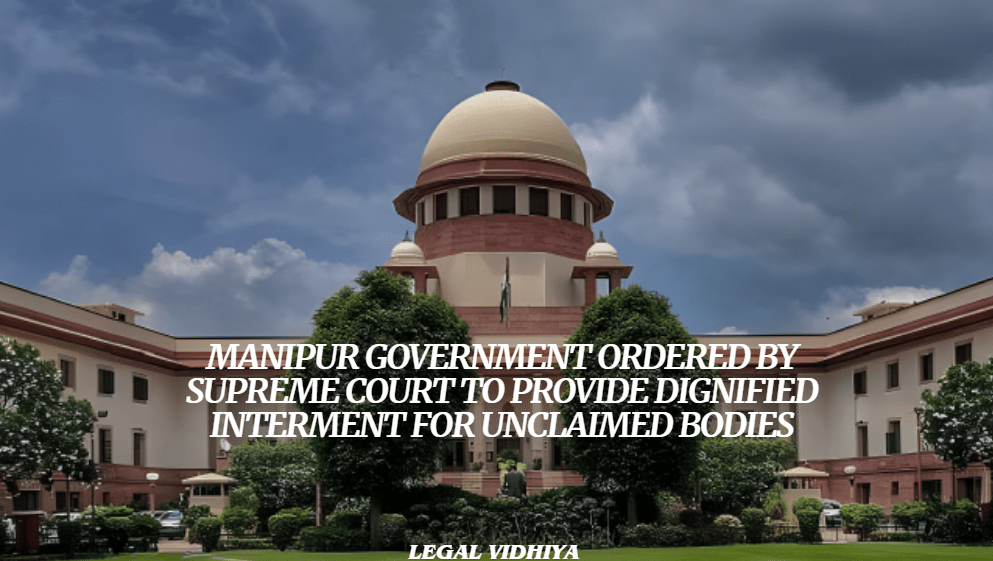
After learning about 94 unidentified bodies held in mortuaries, the Supreme Court on Tuesday issued directives to ensure the proper burial or cremation of those murdered during the ethnic violence in Manipur. The court said it would rather not “keep the pot boiling” over the matter.
A bench led by Chief Justice D Y Chandrachud reviewed a report on the stance on dead remains submitted by the all-woman committee of former high court judges established by the Supreme Court, chaired by Justice (retd) Gita Mittal.
According to the allegation, state authorities were keeping 94 unclaimed bodies in mortuaries. The highest court ruled that keeping the unidentified and unclaimed bodies in the mortuaries indefinitely would not be legal or suitable.
The study states that 169 of the 175 recorded deaths had bodies identified. Just 81 of the 169 identified bodies have been claimed by the next of kin, according to the top court. The highest court has received a number of pleas, some of which call for relief and rehabilitation as well as a court-monitored investigation into violent situations.
It stated that the nine burial locations that have been made available will be communicated to the next of kin of the identified dead that the state authorities have already claimed. This process is to be completed by December 4 at the latest.
Additionally, it allowed the state to properly observe religious rites when burying or cremating unidentified dead. The bench declared that in order to maintain law and order and guarantee that the burials and cremations proceed in a planned manner, the collector and the superintendent of police would be free to take all necessary actions.
REFERENCES:
NAME: HARMANNAT KOUR, COLLEGE: THE LAW SCHOOL, UNIVERSITY OF JAMMU, CLASS: 3RD SEMESTER INTERNING AT LEGAL VIDHIYA
Disclaimer: The materials provided herein are intended solely for informational purposes. Accessing or using the site or the materials does not establish an attorney-client relationship. The information presented on this site is not to be construed as legal or professional advice, and it should not be relied upon for such purposes or used as a substitute for advice from a licensed attorney in your state. Additionally, the viewpoint presented by the author is of a personal nature.





0 Comments