
Keywords: Adultery, Right to Privacy, Supreme Court, Divorce, Justice KS Puttaswamy (Retd.)
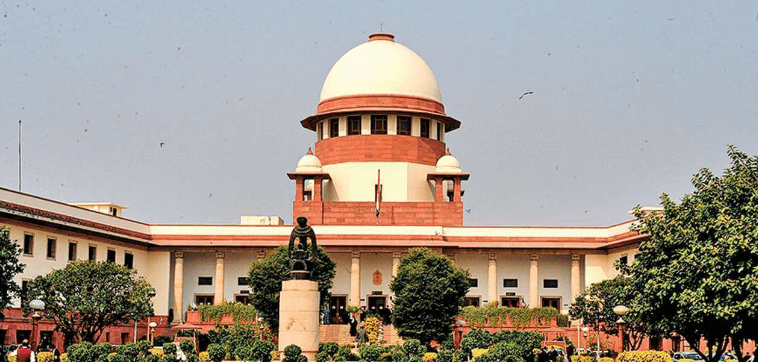
The Supreme Court has recently granted notice in a special leave petition filed by a husband who is contesting a court order that granted his wife, who has accused him of adultery, the authority to acquire and retain his call detail records and information pertaining to his hotel stays. The petitioner raises a crucial question before the court, questioning whether the fundamental right to privacy of a spouse can be violated in cases involving allegations of adultery during divorce proceedings.
A bench comprising Justice Krishna Murari and Justice Sanjay Kumar meticulously heard the Special Leave Petition (SLP), which challenges the decision of the Delhi High Court to uphold the directives of the Family Court. The Family Court had, in its ruling, instructed a hotel in Jaipur to provide crucial information such as booking details and occupant identification for a specific date. Additionally, the mobile service provider was directed to submit the call detail records. The petitioner’s wife alleges that he is engaged in an extramarital affair with a friend he met at a hotel in Jaipur.
The petitioner argues that the family court’s decision blatantly violates his fundamental right to privacy. Moreover, he contends that the High Court’s ruling sets a regressive and draconian precedent, effectively overturning the progress made in the landmark case of Justice KS Puttaswamy (Retd.) v. Union of India (2017). The petitioner emphasizes that the present case involves civil matters and allegations of a highly private nature. He asserts that the challenged order not only jeopardizes the petitioner’s reputation and other related relationships but also allows for unwarranted scrutiny of the character and chastity of his friend.
The petitioner vehemently asserts that adultery is a deeply personal and private matter, and thus the court cannot infringe upon an individual’s fundamental right to privacy. He raises concerns about the intrusive nature of the order and the potential consequences it may have on individuals’ personal lives during divorce proceedings. The petitioner believes that the court should consider the larger implications of such a ruling and its impact on the right to privacy of individuals involved in divorce cases.
Furthermore, the petitioner highlights that the judgment in the case of Joseph Shine v. Union of India (2019) 3 SCC 39 was misinterpreted, giving excessive weight to a specific aspect of the observation made in that case. He argues that this misinterpretation wrongly suggests that the right to engage in a consensual sexual relationship outside of marriage, for a married individual, does not deserve protection under Article 21 of the Constitution.
In conclusion, the petitioner seeks the Supreme Court’s intervention to safeguard his fundamental right to privacy in the face of the court order allowing the acquisition and retention of his call detail records and information about his hotel stays. He urges the court to consider the private and personal nature of the case, while also taking into account the potential consequences of such an intrusive ruling on individuals going through divorce proceedings.[1]
Written by- Lisa Gupta, NUSRL, Ranchi, Semester 3, an intern under Legal Vidhiya
[1] Live Law https://www.livelaw.in/top-stories/supreme-court-fundamental-right-to-privacy-adultery-allegation-divorce-proceedings-232117 Last visited 07.07.2023 at 11:30 am





0 Comments