
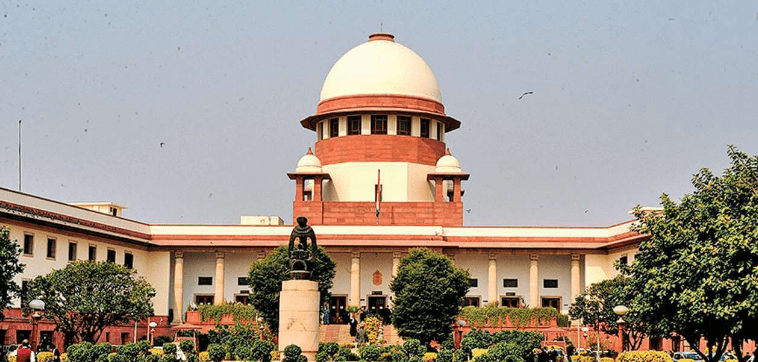
According to the seniority rule, the majority of the justices on the current Supreme Court collegium will eventually become Chief Justices of India.
Justices B.R. Gavai and Surya Kant are the two new members who have joined the collegium. Following the Chief Justice and Justice Sanjay Kishan Kaul as the third judge in the collegium is Justice Sanjeev Khanna.
Despite not being one of the court’s original four puisne justices, Justice Khanna was a member of the earlier collegium because he was slated to succeed Chief Justice Chandrachud in November 2024. The Third Judges Case and the Memorandum of Procedure for the Appointment of Supreme Court Judges had said that the choice of judges should be made with input from the CJI who will succeed the current CJI.
With Justice M.R. Shah’s retirement in May, the collegium’s normal five-member structure was restored. Justices K.M. Joseph and Ajay Rastogi, two additional justices from the previous collegium, also retired in June, during the summer vacations, opening the door for Justices Gavai and Kant to join the Chandrachud Collegium.
In May 2025, Justice Gavai is anticipated to succeed Justice Khanna as chief justice. After Justice Gavai retires in February 2027, it is anticipated that Justice Kant would take over as Chief Justice in November 2025.
When Justice Kaul, the second-ranking Supreme Court justice at the moment, retires in December 2023, the collegium will undergo its next shift. After that, Justice Aniruddha Bose would join the collegium and remain a member until his retirement in April 2024.
After the court reopens on July 3, the new collegium would have to get to work. When Justice V. Ramasubramanian retires on June 29, the number of justices on the supreme court will drop to 31. On July 8, Justice Krishna Murari will also retire, leaving the court with four vacancies. 34 judges are authorised to serve on the bench.
As of July 3, the Supreme Court’s 15 Benches will be assigned cases according to a new subject-based roster that was announced. The Benches of the Chief Justice of India, Justices Kaul and Khanna would be hearing public interest petitions. Cases dealing with key subjects such as elections, habeas corpus pleas, appointment of constitutional functionaries, personal law matters, commissions of inquiry, criminal matters, admissions, etc., would be heard by the Chief Justice’s Bench.
Written by- Aditya Singh intern under legal vidhiya





0 Comments