
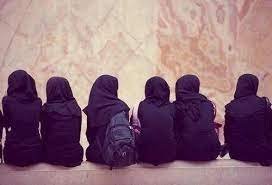
On 31st December, 2021, Government Girls PU College, Udupi imposed a sudden restriction on the hijab inside classrooms. The college enforced this restriction in the absence of any rule, resolution or guideline. The college uniform was a blue coloured chudidhar with dupatta, and they prohibited students from using the dupatta as a headscarf. Six students protested the move by sitting outside the classroom for 3 days and demanded that they be allowed to wear the hijab and attend classes.
15th March, 2022 The High Court of Karnataka passed a final order upholding the Government Order dated 05.02.2022 and thereby, allowed for restriction of the hijab in educational institutions. A Special Leave Petition was filed in the Supreme Court of India challenging the Karnataka HC order dated 15.03.2022.
The Supreme Court delivered a split verdict on the hijab ban. To adjudicate on the hijab restriction, the matter is referred to the Chief Justice of India for the constitution of a larger bench. The matter is still pending before the Supreme Court and the ban is still continuing which means a female student is still not allowed to attend classes while wearing a Hijab.
On January 9, a report was published by People’s Union for Civil Liberties (PUCL) -Karnataka, which had undertaken a study titled as “Closing the Gates to Education: Violations of Rights of Muslim women students.” to investigate the impact of the imposed ban on the students and examine the role of authorities, administrative officials and police officials.
“Through conversations with students as well as authorities, and an analysis of events that transpired, it becomes visibly clear that Muslim women students were not only actively prevented from accessing their right to education, but also bore the brunt of a climate of hate, hostility and misinformation. Students have faced humiliation and harassment in their own classrooms at the hands of their faculty, college administration and classmates. The report documents how vigilante groups of Hindutva organisations carried out a vilification campaign against hijab wearing students and how the inaction of the government and police gave implicit encouragement to these fundamentalist forces.” reads the report
The objective of conducting this study/report was three-folded:
1. Firstly, to assess the impact of the restriction on wearing hijab on Muslim women students across Karnataka on their fundamental rights
2. Secondly, to document the experiences and struggles of the Muslim women students during the Karnataka High Court hearings as well as after the judgement was pronounced by the Karnataka High Court
3. Lastly, to investigate the roles of administrative authorities at the district level and at the college level and contextualise this education crisis amidst a larger global discourse around the hijab. The report also documents the way vigilante groups run by Hindutva organisations ran widespread hate campaigns, promoted by the Media.
The team for undertaking the study consisted of Aishwarya Ravikumar, Kishor Govind, Poorna Ravishankar, Ramdas Rao and Shashank S.R.
The report discussed the ‘Timeline of Events’, the sequence of major developments which transpired from December 31, 2021 to the split verdict delivered by the Supreme Court. With regard to legal and constitutional violations, the report provides an analysis of the violations of the female students rights:
1. Right to Education without discrimination
2. Right to Dignity
3. Right to Privacy
4. Right to Freedom of Expression
5. Right to Non-Discrimination
6. Freedom from Arbitrary State Action
“It was traumatic to realise that they had, at a stroke, lost their education as well as the support of friends and teachers they had long trusted”
The study conducted by PUCL, Karnataka documents the voice of the affected students and cull out their concerns and experiences during the ban on Hijab, which is presently continuing. While talking about the ban, the female Muslim students felt an enormous shock when they got to know that some of their classmates and even friends had joined the bandwagon to oppose the Hijab.
“It was traumatic to realise that they had, at a stroke, lost their education as well as the support of friends and teachers they had long trusted. They also shared that the Muslim community felt isolated during the crisis, and wished that more citizens of India had stood up for their fundamental right.” reads the report
Written by
Kashish Gupta
BBALLB-3rd semester
Shri Ramswaroop Memorial University Barabanki




0 Comments