
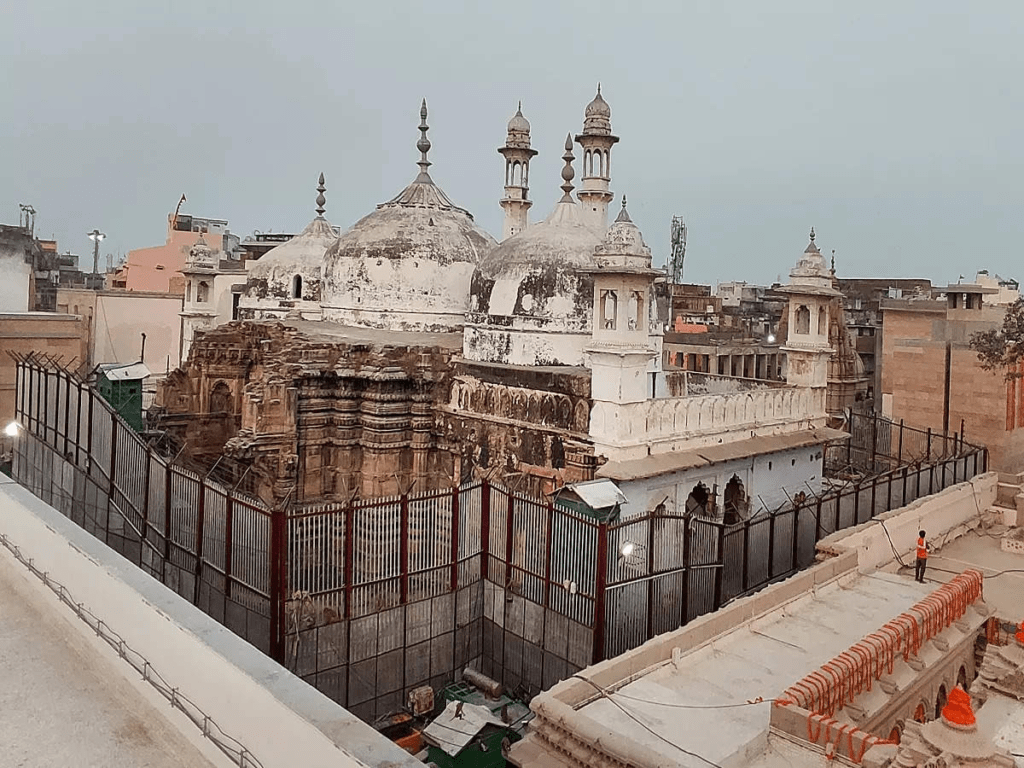
The recent development in the Gyanvapi – Kashi Vishwanath case, where a Varanasi court has directed the Archaeological Survey of India (ASI) to hand over the items recovered during its survey to the District Magistrate, has ignited a fresh wave of discussions and debates. This decision has significant legal implications and raises questions about the ownership, preservation, and protection of historical and religious artifacts.
The Gyanvapi Mosque, situated adjacent to the Kashi Vishwanath Temple in Varanasi, has been at the centre of a long-standing legal dispute. The recent court directive pertains to the ASI’s survey of the mosque’s complex, which was ordered by the court to determine whether there existed any remnants of an earlier temple structure beneath the mosque. The ASI’s survey is part of the court’s effort to establish historical facts and assess the need for any further action.
The legal provisions underlying this case primarily revolve around the protection of historical monuments and religious places in India. The Ancient Monuments and Archaeological Sites and Remains Act, 1958, empowers the ASI to conduct surveys, excavations, and research at protected sites. The Kashi Vishwanath Temple and the Gyanvapi Mosque are both considered historically significant and fall under the purview of this Act.
However, the legal aspects extend beyond the ASI’s jurisdiction. The Places of Worship (Special Provisions) Act, 1991, is another critical piece of legislation in this context. This Act prohibits the conversion of any place of worship and the disruption of the religious character of any such place as it existed on August 15, 1947. It seeks to maintain the status quo and ensure that religious harmony is not disturbed. The legal tussle over the Gyanvapi Mosque and the Kashi Vishwanath Temple raises questions about the delicate balance between historical preservation and religious sentiments. While the ASI’s survey aims to uncover historical facts and architectural heritage, it must also be conducted with sensitivity to the religious beliefs of the people involved.
The recent court directive to hand over the recovered items to the District Magistrate is a significant development. It implies that the artifacts found during the survey will be in the custody of the local administration, which is responsible for their preservation and protection. This decision aligns with the duty of the government to safeguard and promote India’s rich cultural and historical heritage. However, the question of ownership and control remains complex. The items recovered during the ASI’s survey may have both historical and religious significance, making it crucial to strike a balance between their preservation and their role in religious practices.
Furthermore, this case brings forth the broader issue of the separation of religion and state in India. The Indian Constitution guarantees freedom of religion under Article 25 while also enshrining the principle of secularism. Balancing these principles while dealing with religious sites and disputes requires a nuanced approach by the judiciary and government authorities.
In conclusion, the recent directive of the Varanasi court regarding the Gyanvapi – Kashi Vishwanath case underscores the legal complexities surrounding historical and religious sites in India. While the ASI’s survey aims to uncover historical truths, the court’s directive to hand over the recovered items to the District Magistrate emphasizes the importance of preserving and protecting cultural artifacts. This case serves as a reminder of the delicate balance between historical preservation and religious sentiments and highlights the need for a nuanced and sensitive approach when dealing with such matters. It also underscores the broader constitutional principles of secularism and freedom of religion that guide India’s legal system.
RIDHI MITTAL, SYMBIOSIS LAW SCHOOL, INTERN under legal vidhiya.





0 Comments