
Keywords: special neutral bench, OBC, unreserved categories, Rs. 50,000 costs, High Court, Special Leave Petition, reservation, interlocutory application, recusal, intimidating the Court.
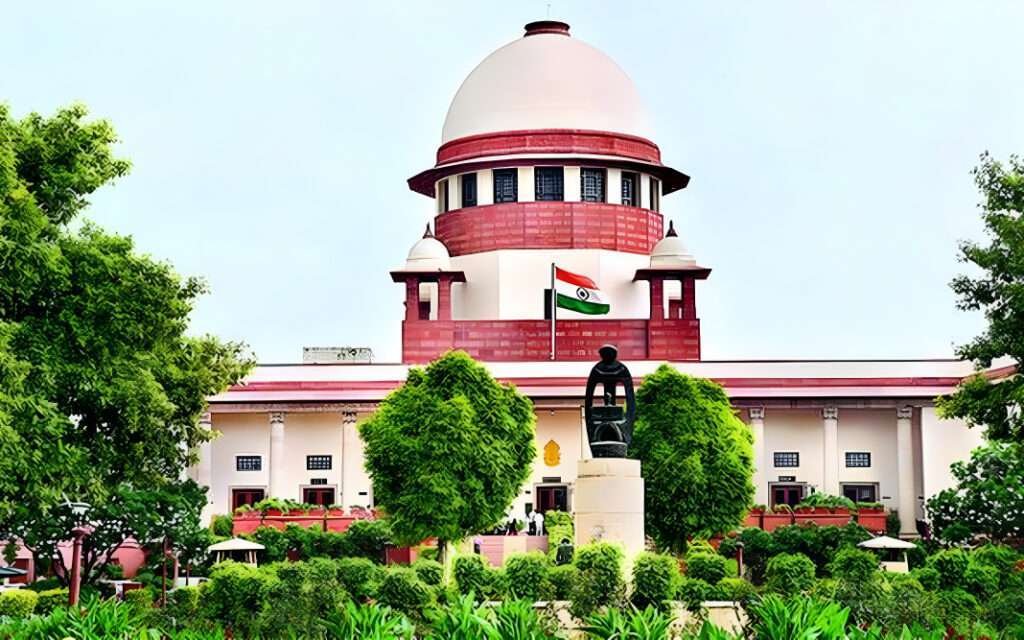
The Apex Court imposed of Rs. 50,000 costs on a petitioner who requested the formation of a “special neutral bench” consisting of judges not belonging to the OBC and unreserved categories.
The current plea challenged the Madhya Pradesh High Court’s decision rejecting the application for forming a special bench to hear the group of petitions related to the extent of OBC reservation in Madhya Pradesh.
A Division Bench, consisting of Justice Hrishikesh Roy and Justice Pankaj Mithal, stated that the only flaw they found in the High Court’s order was the failure to impose heavy costs on the petitioner who filed a misguided application seeking formation of a special bench to the writ petition. They dismissed the misconstrued Special Leave Petition and imposed Rs. 50,000 costs on the petitioner to be deposited with the Supreme Court Legal Services Committee within one month from the current date.
The petitioner had approached the High Court with a request to form a Special Bench consisting of Judges who did not belong to either the OBC or unreserved category to hear the case. The reason given for such a request was that the matters under consideration were filed by candidates from either the OBC or unreserved category.
One petition was related to increasing the OBC category’s reservation from 14% to 27% in public service, while the other concerned individuals from the unreserved category.
On March, 2020, A Division Bench of Madhya Pradesh High Court, comprising Justices Sheel Nagu and Virender Singh, set aside the interlocutory application. The court viewed it as an endeavor to intimidate the Current Bench members, deliberately prolong the proceedings, undermine the dignity of justice and interfere with the administration of justice.
It was noted that a judge is not purported to step aside based on a litigant’s or lawyer’s request. Following the oath and deciding the case fairly is the usual practice, while recusal is an infrequent exception. The High Court had reached the conclusion that recusal was unnecessary in this case, stating that if any of the judges step down from the case, it would go against their oath to deliver justice impartially, without any fear, affection, or animosity.
References:
- Live Law, https://www.livelaw.in/top-stories/supreme-court-imposes-cost-of-rs-50000-on-litigant-who-sought-constitution-of-neutral-special-bench-without-judges-from-obc-or-unreserved-category-to-hear-a-reservation-matter-233125, accessed 20 July 2023.
- Bar and Bench, https://www.barandbench.com/news/litigation/supreme-court-50000-cost-neutral-bench-without-upper-caste-obc-judge-reservation, accessed 20 July 2023.
By: Saatvik, BBA LL.B. (Hons.), upcoming law student at Vivekananda Institute of Professional Studies, GGSIPU, Delhi, an intern under Legal Vidhiya.



0 Comments