
This article is written by Thrishitha Kolukuluri of Damodaram Sanjivayya National Law University, Vishakhapatnam an intern under Legal Vidhya
Abstract
Climate change has emerged as a significant driver of human displacement, yet international law has failed to evolve in response to this reality. Individuals forced to flee their homes due to rising sea levels, extreme weather events, drought, and environmental degradation remain excluded from formal refugee protection frameworks. The 1951 Refugee Convention, designed to address persecution-based displacement, does not recognize climate-induced harm, leaving affected populations in a legal and humanitarian vacuum. While human rights law and climate governance mechanisms under the UN Framework Convention on Climate Change offer limited and fragmented responses, they do not provide enforceable or comprehensive protection. This article examines the concept of climate refugees, highlights the shortcomings of existing legal regimes, and explores the moral and legal implications of state inaction. It argues that a separate international convention on climate change refugees offers the most effective solution by integrating human rights, humanitarian principles, and environmental responsibility. Such a framework is essential to ensure protection, accountability, and justice in an era of escalating climate displacement.
Keywords
Climate migration, Dispossession, Precarity, Statelessness, Accountability, Protectionism, Governance, Reparations
Introduction
Climate change is one of the elephants in the room that no one is ready to address. It has been on debate since 1990’s and many protocols and agreements have been signed since, but in vain. One of the major problems climate change has been causing is climate refugees, who much like war refugees have nowhere to go. They are paying for the inaction which the governments are supposed to carry. Arresting climate activists isn’t going to mitigate the problem. Facing it would. Actively participating and enforcing the decisions would. It is unfortunate that most developed countries are not ready to do it. The legal implications of handling the refugees is another problem of its own. The refugees convention doesn’t recognize climate refugees, leaving them without protection and any way forward.
Who Are Climate Refugees?
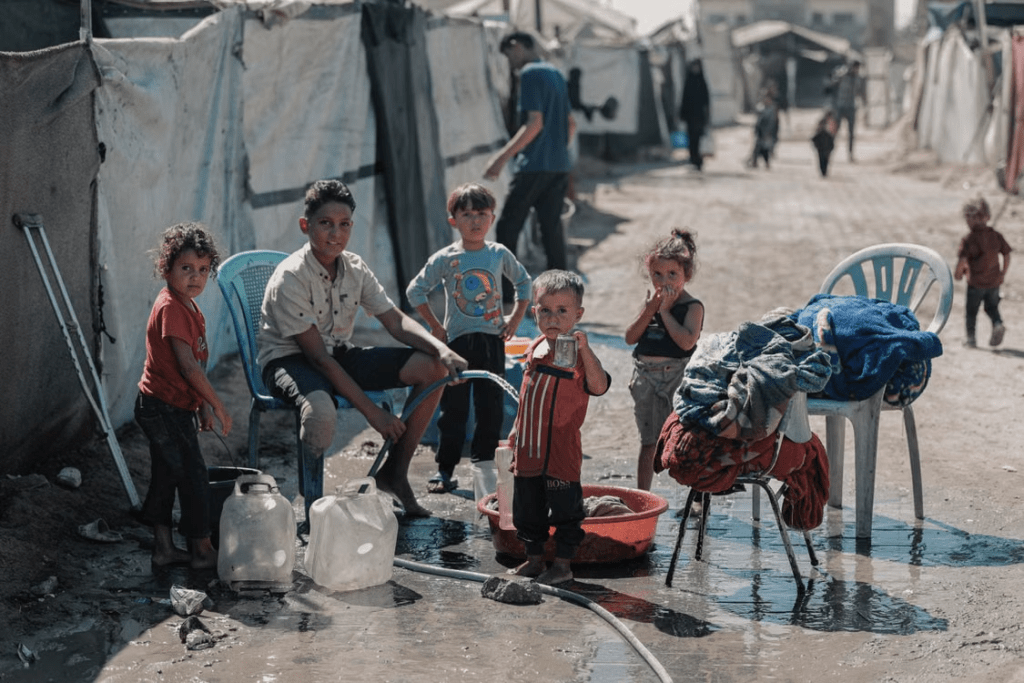
Climate change has transformed from an environmental concern into a humanitarian emergency. Across continents, people are being displaced due to rising sea levels, intensifying cyclones, prolonged droughts, desertification, and the steady collapse of ecosystems. These individuals are commonly described as climate refugees, a term that reflects the forced nature of their movement but remains absent from binding international legal recognition.
A climate refugee may be understood as a person who is compelled to leave their habitual residence, temporarily or permanently, due to sudden or slow-onset environmental disruptions linked to climate change, where human contribution is more likely than not. Such displacement often involves crossing national borders, but the defining feature is not movement itself, rather the absence of any real alternative to leaving. When environmental degradation makes survival impossible, migration becomes an act of necessity rather than choice.
This understanding must also include individuals who relocate permanently in search of a new place to call home. Whether displacement occurs through dramatic events such as floods and cyclones or through gradual processes like drought and soil erosion, the underlying cause remains climate-induced harm. On humanitarian grounds, all persons displaced by climate change deserve protection and assistance, regardless of whether they remain within their home country or cross an international boundary.
Although the term “climate refugee” appears conceptually similar to the refugee definition under the 1951 Refugee Convention, the legal reality is starkly different. The Convention restricts refugee status to persons fleeing persecution based on enumerated grounds such as race, religion, nationality, political opinion, or membership of a particular social group. Environmental harm, however severe, does not fall within this framework. While the 1967 Protocol removed the Convention’s temporal and geographical limits, it did not expand the scope to include climate-related displacement. Consequently, climate refugees remain excluded from formal protection mechanisms.
Scholars and policy experts have attempted to address this gap by proposing broader definitions. Some have described climate refugees as individuals who are forced to leave their habitats, either immediately or in the foreseeable future, due to environmental changes associated with climate change, particularly sea-level rise, extreme weather events, and water scarcity. This approach acknowledges that climate displacement may be both sudden and gradual, yet equally irreversible in its consequences.
It is also necessary to distinguish climate refugees from internally displaced persons, while recognising the overlap between the two categories. Individuals who are unable to sustain their livelihoods due to drought, desertification, deforestation, or environmental degradation may be displaced within their own countries. These persons are often referred to as internally displaced persons (IDPs). Scholars have described such individuals as those who can no longer secure a stable means of survival in their place of origin and are left with no viable option but to relocate. Whether displacement is internal or cross-border, the loss of home, livelihood, and security remains the same, and return is often unlikely in the foreseeable future.
Taken together, climate refugees may be understood as persons forced to leave their homes due to climate-related or environmental disasters. This includes those who flee abruptly for immediate safety and those who relocate gradually as environmental conditions deteriorate beyond repair. The duration of their displacement depends on the severity and permanence of the damage suffered. What unites these groups is compulsion, vulnerability, and the absence of adequate legal protection.
The relevance of identifying climate refugees lies in accountability. Naming and defining this group brings visibility to a crisis that has long been treated as collateral damage. It forces recognition of the human cost of climate inaction and exposes the inadequacy of existing legal frameworks. This issue cannot be separated from the broader failure of states to act decisively on climate change. Climate refugees are paying the price for governmental inaction, particularly by developed countries that have historically contributed most to global emissions. Arresting climate activists or suppressing protest does nothing to mitigate displacement; confronting the crisis and enforcing climate commitments does.
The legal vacuum surrounding climate refugees is increasingly evident. International refugee law offers no protection, while climate agreements under the UN Framework Convention on Climate Change (UNFCCC) focus primarily on mitigation and adaptation rather than displacement. Although mechanisms such as loss and damage discussions acknowledge climate harm, they stop short of creating enforceable rights for displaced persons.
Judicial developments have offered limited relief. In Teitiota v. New Zealand, the UN Human Rights Committee recognised that climate change can threaten the right to life, though it stopped short of granting refugee status. Such decisions signal growing awareness but remain fragmented and case-specific.
Until international law evolves to formally recognise climate refugees, millions will continue to exist in a legal grey zone, displaced by a crisis they did little to create, and protected by laws that were never designed to move with a changing planet.
Need for a Specialised Legal Instrument
One of the strongest arguments in favour of a separate convention on climate change refugees is that it would allow multiple fragmented legal norms to be brought together under a single, specialised framework. At present, the protection of climate-displaced persons is scattered across various domains such as refugee law, human rights law, humanitarian assistance, and international environmental law, none of which independently address the problem in a comprehensive manner. A dedicated treaty would directly respond to the specific challenges posed by climate-induced displacement and would fill the existing legal gap with the clarity and precision that states and affected communities urgently require.
Climate displacement is not confined to one legal field. It simultaneously raises questions of human rights protection, environmental responsibility, humanitarian relief, and international cooperation. A bespoke convention would formally recognise these intersections and provide a unified approach instead of leaving displaced persons to rely on piecemeal and often inadequate protections.
Integrating Human Rights, Humanitarian Law, and Environmental Law
Historically, human rights law, humanitarian assistance, and international environmental law have developed as distinct regimes, rarely converging within a single binding instrument. However, the phenomenon of climate refugees necessitates precisely such integration. Climate displacement affects individuals directly, implicating rights such as life, dignity, housing, and livelihood, while also engaging state responsibilities related to environmental harm and cross-border impacts.
A new convention could effectively combine vertical obligations and horizontal obligations. Vertical obligations refer to duties owed by states to individuals and communities, as seen in human rights frameworks. Horizontal obligations, on the other hand, involve responsibilities between states, particularly in relation to shared environmental harm and collective climate action. Existing legal regimes tend to prioritise one form of obligation over the other. A standalone climate refugee convention would offer a balanced approach, ensuring that neither individual rights nor inter-state responsibilities are subordinated.
Avoiding the Limitations of Existing Frameworks
Relying solely on existing instruments such as the 1951 Refugee Convention or the UN Framework Convention on Climate Change (UNFCCC) presents inherent limitations. Expanding the scope of the Refugee Convention to include climate displacement raises concerns that the original protections for persecution-based refugees could be weakened or diluted. Conversely, addressing displacement solely within the UNFCCC framework risks overemphasising state-to-state obligations while neglecting enforceable rights for affected individuals.
An independent convention avoids this tension by drawing selectively from both systems. It could strengthen the existing refugee framework by incorporating protection standards, while also borrowing from environmental law models that emphasise international cooperation, financial mechanisms, shared responsibility, and long-term planning. This interdisciplinary flexibility is difficult to achieve within pre-existing treaties and is best realised through a new, autonomous legal instrument.
Challenges in Achieving International Consensus
Despite its advantages, the creation of a climate change refugee convention faces significant political and practical obstacles. The term “climate refugee” itself lacks universal recognition, and there is no global consensus on its scope or implications. International processes such as the International Dialogue on Migration and the adoption of the Global Compact for Safe, Orderly, and Regular Migration demonstrate that developing new migration-related norms is often slow, complex, and politically sensitive.
Additionally, climate-induced displacement does not always follow clear migration patterns. Much of it occurs internally or within regions, making states reluctant to accept binding cross-border obligations. There is also concern that recognising climate refugees could increase migration pressures or impose disproportionate responsibilities on certain states, particularly those in the Global North.
The Refugee Convention and Its Limits
The limitations of the existing refugee framework further underline the need for a separate treaty. The 1951 Refugee Convention defines refugees as individuals fleeing persecution based on specific grounds such as race, religion, nationality, political opinion, or membership of a particular social group. Environmental harm does not fall within this definition. Climate change does not operate through intent or targeted persecution; it affects populations collectively, though often unequally.
As a result, individuals displaced by climate disasters fall outside the formal protection of refugee law. They are frequently classified as irregular migrants, temporary evacuees, or recipients of ad hoc humanitarian assistance, with no assured right to asylum, resettlement, or durable solutions.
A Growing Legal Vacuum
This exclusion has created a profound legal vacuum. Climate refugees exist in reality but not in law. While states may offer short-term relief after disasters, such responses are discretionary, inconsistent, and often withdrawn once immediate emergencies subside. When displacement crosses international borders, the problem becomes more acute. International law prioritises state sovereignty while imposing minimal obligations toward non-citizens displaced by environmental harm.
This imbalance places an unfair burden on developing countries, which host the majority of climate-displaced populations despite contributing least to global emissions.
Human Rights as an Incomplete Solution
Human rights law has offered some limited protection by recognising that returning individuals to severely climate-vulnerable regions may violate fundamental rights such as the right to life or dignity. However, these developments are reactive, case-specific, and insufficient to address large-scale displacement. Human rights law may soften the consequences of exclusion, but it cannot substitute for a dedicated legal framework.
Conclusion
Climate-induced displacement exposes one of the most profound failures of the contemporary international legal order. While climate change reshapes landscapes, livelihoods, and lives, the law remains anchored to outdated categories that do not reflect present realities. Climate refugees exist in increasing numbers, yet they remain legally invisible, navigating a world that acknowledges their suffering but offers no enforceable protection. This gap is not merely technical; it represents a deeper unwillingness of states to confront the human consequences of environmental degradation.
The limitations of the 1951 Refugee Convention highlight the urgency of reform. Designed for persecution-based displacement, it cannot accommodate a form of harm that is collective, gradual, and environmentally driven. Attempts to stretch existing frameworks risk weakening established protections without resolving the specific vulnerabilities faced by climate-displaced persons. At the same time, climate governance regimes focus primarily on emissions, adaptation, and state responsibility, leaving affected individuals on the margins of legal concern. Human rights law offers some relief, but its fragmented and reactive nature cannot substitute for comprehensive protection.
A separate climate change refugee convention presents a principled and pragmatic solution. By integrating human rights, humanitarian principles, and environmental responsibility, such an instrument could address both individual protection and shared state obligations in a balanced manner. It would allow for predictable legal status, coordinated international cooperation, and equitable burden-sharing, particularly between states that have historically contributed most to climate harm and those that now bear its consequences.
Ultimately, the question is not whether the law is capable of evolving, but whether political will exists to drive that evolution. Climate refugees are not the by-product of natural disasters alone; they are the human cost of prolonged inaction. Recognising and protecting them is not an act of charity, but a matter of justice. As climate impacts intensify, the credibility of international law will depend on its ability to respond not only to shifting borders, but to a changing planet itself.
References
- Biermann, F. and Boas, I. (2010) ‘Preparing for a warmer world: Towards a global governance system to protect climate refugees’, Global Environmental Politics, 10(1), pp. 60–88.
- Betts, A. (2013) Survival migration: Failed governance and the crisis of displacement. Ithaca: Cornell University Press.
- Dehm, J. (2016) ‘Climate change, forced migration and international law’, Cambridge Journal of International Law, 5(2), pp. 1–25.
- Goodwin-Gill, G.S. and McAdam, J. (2007) The refugee in international law. 3rd edn. Oxford: Oxford University Press.
- Intergovernmental Panel on Climate Change (IPCC) (2022) Sixth assessment report: Impacts, adaptation and vulnerability. Geneva: IPCC.
- International Organization for Migration (IOM) (2011) Discussion note: Migration and the environment. Geneva: IOM.
- Kälin, W. and Schrepfer, N. (2012) Protecting people crossing borders in the context of climate change. Geneva: UNHCR.
- Knox, J.H. (2016) ‘Human rights principles and climate change’, in Oxford handbook of international climate change law. Oxford: Oxford University Press, pp. 213–241.
- McAdam, J. (2012) Climate change, forced migration, and international law. Oxford: Oxford University Press.
- Myers, N. (2002) ‘Environmental refugees: A growing phenomenon of the 21st century’, Philosophical Transactions of the Royal Society B: Biological Sciences, 357(1420), pp. 609–613.
- Office of the United Nations High Commissioner for Human Rights (OHCHR) (2020) The slow onset effects of climate change and human rights protection. Geneva: OHCHR.
- United Nations (1951) Convention relating to the status of refugees. Geneva: United Nations.
- United Nations (1967) Protocol relating to the status of refugees. New York: United Nations.
- United Nations Environment Programme (UNEP) (2015) Climate change, human rights and forced migration. Nairobi: UNEP.
- United Nations Framework Convention on Climate Change (UNFCCC) (1992). New York: United Nations.
- United Nations General Assembly (1998) Guiding principles on internal displacement. UN Doc. E/CN.4/1998/53/Add.2.
Disclaimer: The materials provided herein are intended solely for informational purposes. Accessing or using the site or materials does not establish an attorney-client relationship. The information presented on this site is not to be construed as legal or professional advice, and it should not be relied upon for such purposes or used as a substitute for advice from a licensed attorney in your state. Additionally, the viewpoint presented by the author is personal.






0 Comments