




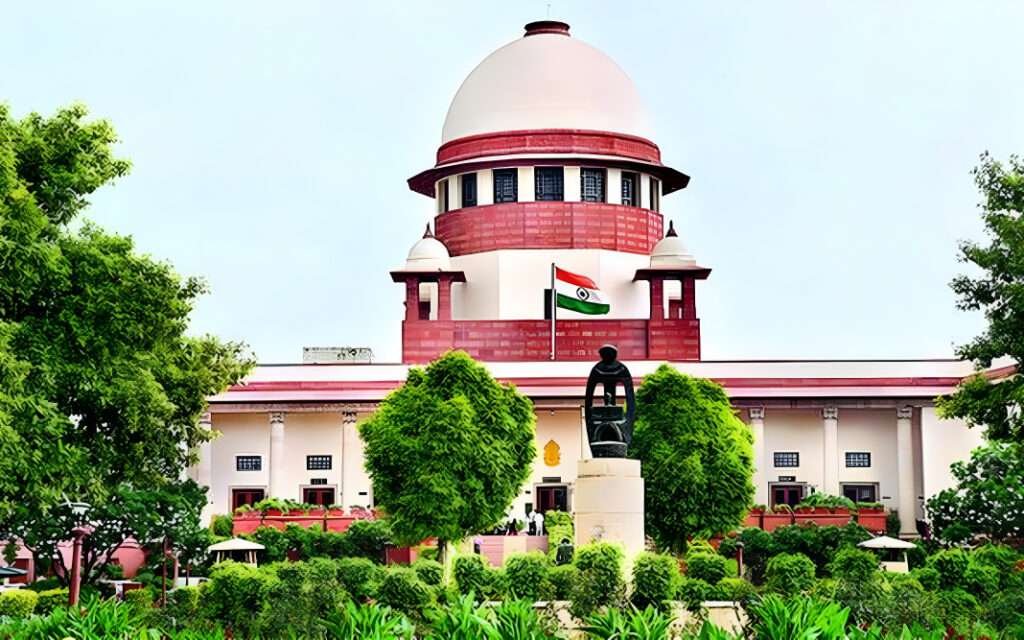
The Supreme Court has referred the petitions challenging the anonymous electoral bonds scheme to a Constitution Bench of five judges. Chief Justice of India, DY Chandrachud, pronounced that the matter will be placed before a bench of at least five judges on October 30. A batch of petitions filed in 2017 challenges the amendments introduced by the Finance Act 2017 that paved the way for the anonymous electoral bonds scheme. Last week, a 3-judge bench led by CJI Chandrachud had agreed to hear the petitions before the upcoming general elections. To make room for the electoral bonds, the Finance Act of 2017 amended the laws governing the Reserve Bank of India, corporations, income taxes, representation of the people, and foreign contributions regulations. Section 29C of the Representation of Peoples Act of 1951 (RPA) was amended in 2017 to allow donors to purchase electoral bonds at specific banks and branches using electronic payment methods after meeting the KYC (know your customer) standards. Political parties are not compelled to tell India’s Election Commission (ECI) where these bonds came from, though. Any amount, in multiples of Rs 1,000, Rs 10,000, Rs 1 lakh, Rs 10 lakh, or Rs 1 crore, may be used to purchase the bonds. The bond is valid for 15 days from the date of issue, within which it has to be encashed by the payee-political party. For the purposes of Section 13A of the Income Tax Act of 1961, the face amount of the bonds must be considered income in the form of voluntary donations received by a qualified political party.
NGOs Common Cause and Association for Democratic Reforms (ADR) as well as the political group Communist group of India (Marxist) have filed petitions challenging the system as “an obscure funding mechanism system which is unchecked by any authority”. The petitioners expressed concern that “private corporate interests will take precedence over the needs and rights of the people of this country” as a result of the revisions to the Companies Act of 2013,the State in policy considerations”. In March 2019, the Election Commission of India filed an affidavit stating that the anonymous electoral bond scheme was a “retrograde step” as it has a serious impact on transparency in political funding. The Supreme Court had recently refused to stay the release of electoral bonds ahead of the assembly elections in certain States.
Written by N.Yogendra Mani of KL University Vijayawada Andhra Pradesh ( 5th semester) an intern under Legal Vidhiya

