




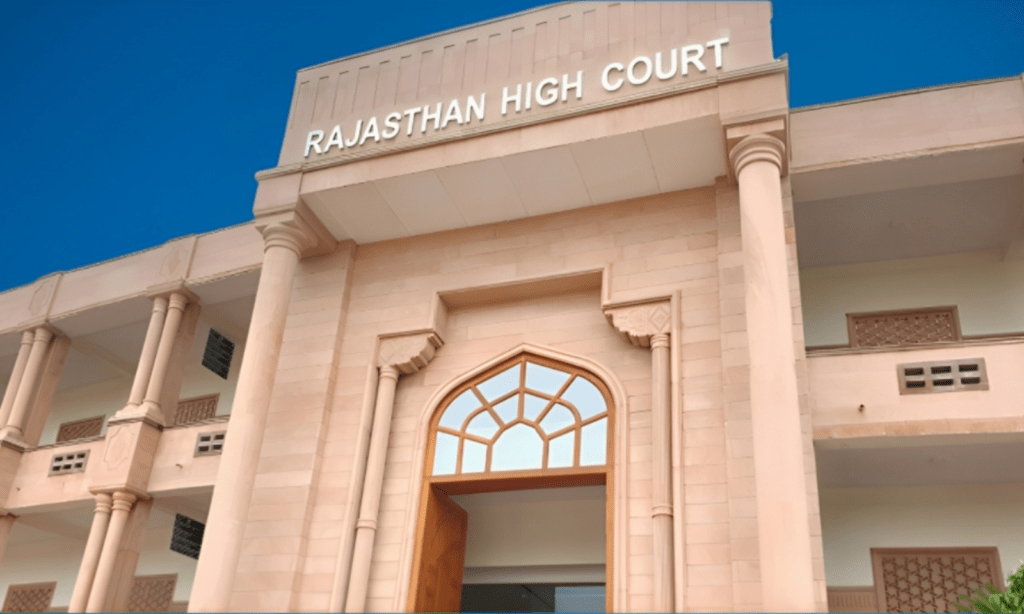
The Rajasthan High Court has ruled that the state cannot discriminate against males, overturning a decision made by the Rajasthan State Electricity Board (RSEB) in October 1996 that only women would be appointed as lower division clerks (LDC) as part of a humanitarian initiative [Ashish Arora v. Rajasthan State Electricity Board].
According to the Court, the provisions of Articles 14 and 16 suggest that the State will not discriminate against men and women when hiring employees and that a citizen will not be disqualified from holding office or employment with the State only based on sex.
The Court determined that the exclusion of male applicants from consideration for compassionate appointment to the position of LDC was entirely motivated by gender discrimination and was a breach of the Ministerial Staff Regulations of the Rajasthan State Electricity Board, which were established in 1962.
Article 14 of the Indian Constitution forbids the State from depriving any individual of equality before the law or equal protection of the laws, and Article 15(1) forbids discrimination based on religion, race, caste, sex, or place of birth. This was underlined by single-judge Justice Anoop Kumar Dhand. [1]
Therefore, no citizen may be subjected to discrimination based on their place of birth, race, caste, or religion. Article 16 guarantees equality of opportunity in areas relating to work under the State and draws its inspiration from Article 14. Accordingly, the court said in its judgement of April 26 that the basic principle of equality dictates that people should be treated equally in similar situations and under similar conditions.
The ruling was reached when two individuals petitioned, claiming that despite having the necessary credentials, the RSEB had not appointed them as LDCs in accordance with the government decision of October 17, 1996. The petitioners emphasised that they were offered the position of helper (group I) instead.
The RSEB, however, defended its October 1996 judgement, claiming that while many males were hired as assistants because they had registered in large numbers for the humanitarian plan, few women were hired since they had applied in small numbers.
However, the Court pointed out that such an order was against both the 1962 Ministerial Staff Regulations of the Rajasthan State Electricity Board and the Constitution’s provisions.
The judge emphasised that Article 14 of the Indian Constitution guarantees equality and that its fundamental goal is to shield people in comparable situations from discriminating treatment.
The Indian Constitution’s Articles 14, 15, and 16 guaranteeing equality before the law serve as an admonition to the state’s legislative and executive branches. The Court ruled that in order to avoid violating Articles 14 and 15, neither the legislature nor the rule-making authority can create any laws or rules, or issue any directives, circulars, or even administrative instructions.
A categorization made by the State needs to be accurate and have some connection to the goal that is being pursued.
The fact that there were fewer similarly qualified female candidates than there were eligible male candidates does not give the respondents the right to discriminate against the petitioners in selecting them for the position of LDC. The bench determined that the order of the RSEB was in violation of Articles 14 and 16, and as a result, it was nullified.
The Court stated that the challenge, in this case, was against a guideline rather than legislation since a guideline has a far lower status than a statute.
The matter at hand does not involve legislation, but a policy that is a guideline; as a result, a policy that is a guideline is placed below a statute in importance. The bench noted that if statutes are found to violate the principles of Article 14 by the Constitutional Courts because they depict discrimination leading to gender bias, a policy or guideline that depicts such discrimination, even in the most abstract sense, would be of little consequence.
The bench revoked the RSEB order after making these points.
While advocates Aveesh Mourya and HC Mourya spoke on behalf of the State authorities, advocate Punit Singhvi defended the petitioners. [2]
Written by- Himanshu Mishra, a student at St. Mother Teresa Law Degree College, Lucknow, 2nd Semester, an intern under Legal Vidhiya.


References:
[1] BAR AND BENCH, https://www.barandbench.com/news/right-to-equality-rajasthan-high-court-quashes-1996-government-order-discriminating-against-men-appointment-electricity-board (last visited on 5 JUNE 2023);

