




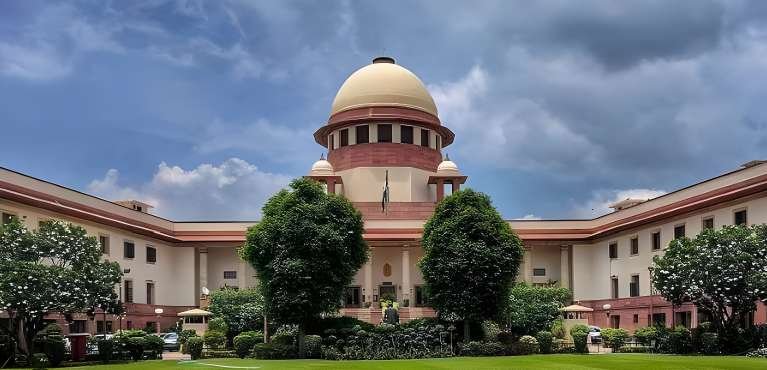
The Telangana police were criticized by the Supreme Court (SC) on Monday, September 4, for their misuse of the preventive detention law, which resulted in curbing the liberty of citizens. The SC bench comprising Justices Surya Kant and Dipankar Datta observed that the law was not to be used carelessly. This observation was made in response to Ameena Begum vs. the State of Telangana, where the detention order passed against the appellant’s husband was quashed. The appellant had earlier filed a writ of habeas corpus with the Telangana High Court, which was denied, leading her to approach the SC.
The SC further observed that while the nation celebrates Azadi Ka Amrit Mahotsav to commemorate 75 years of independence, some police officers in Telangana seem to be oblivious that The Constitution guarantees fundamental rights, but some are being restricted, limiting people’s freedom. The court reiterated the importance of safeguarding the Fundamental Rights enshrined in the Constitution, particularly under the ‘golden triangle’ formed by Articles 14, 19, and 21.
The Supreme Court has raised concerns regarding the frequent and unwarranted use of preventive detention in legal proceedings. The court emphasized that this measure should only be used in exceptional cases, and not as a regular practice. As a result, the High Court’s ruling and the detention order were overturned, and the individual in question was ordered to be released without delay.
The court pointed out that the relevant authorities had failed to distinguish between offences that cause a “law and order” situation and those that tend to adversely affect “public order.” The court emphasized that the severe measures of the 1986 Telangana Prevention of Dangerous Activities Act should not be used carelessly. Preventive detention is a legal provision intended to prevent an individual from committing an offence, rather than punishing them. This provision is protected by Article 22 of the Constitution, which also specifies the grounds on which an individual may be detained and the rights of the detained person.
Written by B. Krishna nikhitha of KL University Vijayawada Andhra Pradesh ( 5th semester )an intern under Legal Vidhiya

