




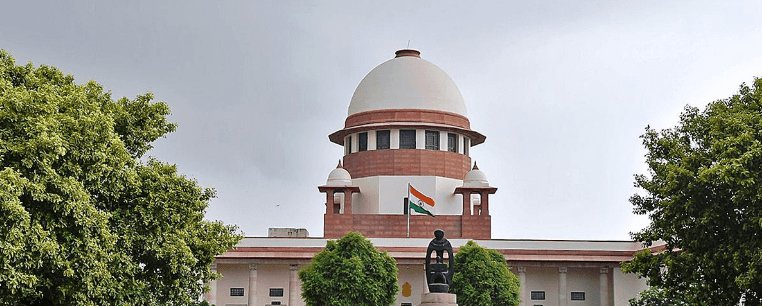
In the case of State of Telangana vs Secretary to her Excellency the Hon’ble Governor for the State of Telangana and Anr., the Supreme Court acknowledged the issue of Governors of States causing delays in giving their assent to bills passed by the State legislature. The Court emphasized the importance of Governors fulfilling their duty under Article 200 of the Constitution, which requires them to approve bills “as soon as possible”.
The Chief Justice of India (CJI) DY Chandrachud and Justice PS Narasimha’s bench highlighted the importance of the phrase “as soon as possible” in Article 200(1) of the Indian Constitution, emphasizing that it carries a significant constitutional intent that constitutional authorities must keep in mind. The Court made this observation while resolving a petition filed by the State of Telangana, which requested directions to be issued to Governor Tamilisai Soundararajan to give her assent to ten critical bills passed by the State legislature, which were awaiting her approval.
The Solicitor General (SG) Tushar Mehta informed the Court that no bill was awaiting the Governor’s assent and that some bills had been sent back for further comments. The Court disposed of the plea after receiving this update. The plea filed before the Court claimed that the State had to seek the intervention of the apex court under Article 32 due to the Governor of Telangana’s recurring constitutional impasse, where the Governor had repeatedly declined to act on numerous bills passed by the State legislature.
The plea asserted that the Governor’s failure to adhere to the Constitutional mandate should be deemed “highly irregular, illegal, and against the Constitutional mandate.” During today’s hearing, Solicitor General Mehta stated that nothing remained in the case, as all the bills mentioned in the plea had either received the Governor’s assent or had been sent back for reconsideration.
Senior Advocate Dushyant Dave, representing the Telangana government, expressed concerns that elected State governments were being left at the mercy of Governors due to their delays in approving bills passed by the State legislature. He further claimed that such issues were prevalent only in States governed by non-BJP parties.
Dave pointed out that bills in states such as Madhya Pradesh and Gujarat were promptly approved within a day. However, he claimed that this issue was occurring only in states ruled by opposition parties. When Dave asked for the SG’s opinion, the latter declined to comment, stating that he could not express an opinion. Dave then reminded the SG that he was the law officer appointed by the Central government. He requested the Court to include in its order a directive that Governors must quickly approve bills. The SG objected to this plea, stating that it might not be appropriate.
The SG objected, stating that it might not be a suitable prayer as it could indicate non-compliance with the Constitution. Despite this objection, the Court chose to include this directive in its order while disposing of the plea.
Towards the end of the hearing, there was a tense exchange of words between the SG and Dave. The SG expressed his disagreement with the Court’s suggestion that Governors should act promptly when bills passed by the legislature come before them. “This was not required… I cannot say more… I do not wish to worsen the situation further,” he said. Dave replied, “At least you acknowledge that you are worsening the situation.”
The Punjab government had recently approached the Supreme Court, alleging that Governor Banwarilal Purohit failed to summon the budget session of the house. The Court disposed of this plea after the Governor convened the assembly in accordance with the advice of the council of ministers.
Written by Vaishnavi goel (Ba.Llb) Punjab school of law , Punjabi university, Patiala


