




Keywords: verbal remark, journalists, reporters, accredited correspondent, news article, illicit sale, newborn children, FIR, counter-case, interim protection, ransom, scheme of blackmail.
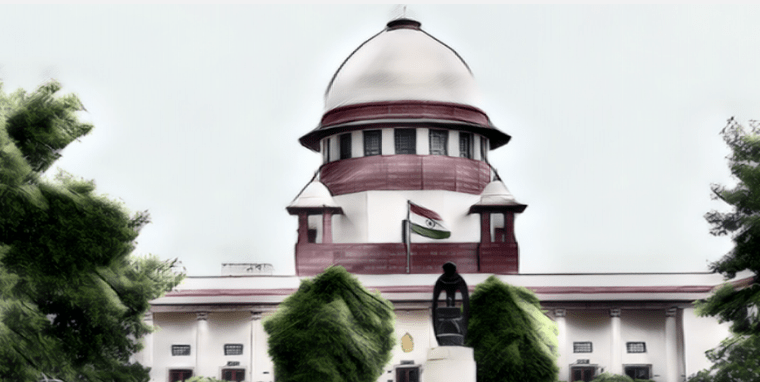
The Apex Court made a verbal remark cautioning journalists or reporters against taking law into their own hands. This remark was made in the context of a plea brought by a journalist who had been denied anticipatory bail by the Madhya Pradesh High Court.
The journalist claimed to be an accredited correspondent who published a news article in the Dainik Bhaskar on 26 July 2021, unveiling a racket engaged in the illicit sale and purchase of newborn children. As a consequence of this, an FIR was lodged against him, accusing him of seeking illicit favors in return for withholding the news and a counter-case was filed by one of the accused involved in the case.
Earlier, on 28 November 2022, the Apex Court had granted interim protection from arrest to the petitioner and other journalists. However, during a recent hearing, a division bench comprising of Justice A S Bopanna and Justice M M Sundresh reviewed the counter statement from the state and took note of the fact that the petitioners are involved in other cases. As a result, the Court observed that the petitioner’s entitlement to the interim protection had ceased. The state’s counsel informed the Court that the investigation against the petitioners is complete and now, the decision of whether to take them into custody is left to the investigating officer’s discretion.
During the hearing, the petitioner’s counsel argued that the complainant’s claim in the FIR, stating that the ransom demanded was 50 lakh rupees, but only 50,000 rupees were paid, is unbelievable. In response, Justice Bopanna made a lighthearted remark that nothing is believable or unbelievable these days.
The Objector vehemently opposed the journalists’ and other applicants’ plea before the High Court, contending that they were not fulfilling their sacred duty as journalists but rather engaging in a scheme of blackmail to gain unwarranted benefits for themselves.
In its ruling, the Madhya Pradesh High Court noted that the allegations against the applicant did not pertain to their role as a journalist or accredited reporter. The court emphasized that any wrongful actions conducted under the guise of their profession cannot be shielded.
References:
- Live Law, https://www.livelaw.in/top-stories/being-a-journalist-doesnt-mean-you-have-the-license-to-take-law-into-your-own-hands-supreme-court-233085, accessed 19 July 2023.
By: Saatvik, BBA LL.B. (Hons.), upcoming law student at Vivekananda Institute of Professional Studies, GGSIPU, Delhi, an intern under Legal Vidhiya.

