




Keywords: PIL, complainants, witnesses, sexual harassment, retaliation, victimization, accused, Sexual Harassment of Women at Workplace Act, relevant authorities.
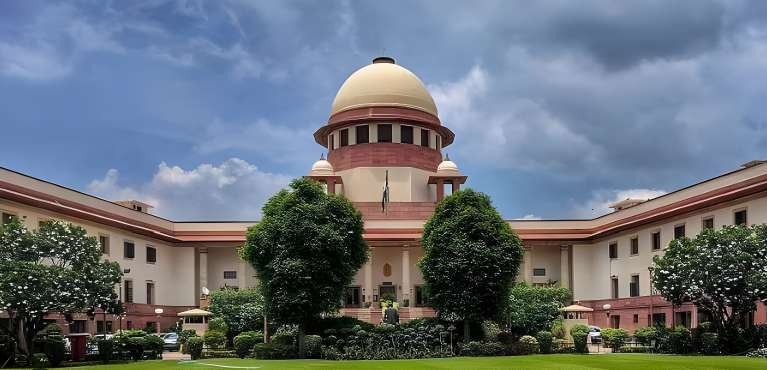
On Friday, the Apex Court declined to entertain a Public Interest Litigation that sought directives to safeguard complainants, witnesses, and other individuals involved in cases of sexual harassment from retaliation or victimization by the accused or their respective organizations. The court had previously rejected a similar PIL from the same petitioner in February 2020, suggesting the alternative recourse of submitting a representation to the government.
A bench headed by CJI DY Chandrachud and Justice PS Narasimha expressed that the petitioner needed to provide specific instances where complainants, witnesses, or other individuals involved in cases of sexual harassment had been subjected to retaliation or victimization by the accused. The bench also acknowledged that issuing a general order would create a new offence.
The petitioner’s counsel argued that guidelines had been issued by the Central Government to safeguard complainants from retaliatory actions, but these guidelines do not extend to the private sector.
In its previous order dated January 6, 2020, the court had refrained from interfering with the Delhi High Court’s dismissal of a PIL with a similar prayer. The petitioner informed the court that she had made a representation to the authorities, followed by a reminder. The court suggested that the petitioner should approach the authorities to address the grievance and make a decision if necessary. The court directed that the grievance be examined at an appropriate level.
The matter originated when the petitioner, Sunita Thawani, approached the Delhi High Court seeking suitable amendments to the Sexual Harassment of Women at Workplace (Prevention, Prohibition, and Redressal) Act, 2013, to explicitly address retaliation/victimization as a form of sexual harassment. They also requested the issuance of directions to protect women who have filed complaints, witnesses, and individuals involved in the inquiry process, including those who have made allegations of contravention of the Act or acts of sexual harassment, from any retaliatory actions. These measures were proposed until appropriate amendments to the Act could be made.
The Delhi High Court dismissed the plea, stating that it effectively seeks to introduce a new offense category in the Sexual Harassment of Women at Workplace (Prevention, Prohibition, and Redressal) Act 2013, specifically the offense of retaliation/victimization. The court reasoned that retaliation, or victimization, are only the provocation for an act of assault. If an act of assault constitutes sexual harassment, it would already be punishable under the Act. Conversely, if the act does not amount to sexual harassment, it cannot be punishable under the Act since it solely addresses offenses of a sexual nature.
In 2020, the petitioner approached the Supreme Court challenging the aforementioned order. However, the Apex Court dismissed the petition. The bench, consisting of Justices R. Banumathi and AS Bopanna, granted the petitioner the freedom to pursue legal remedies in accordance with the law, including the option to make a representation before the relevant authorities.
References:
- Live Law, https://www.livelaw.in/top-stories/sexual-harassment-at-workplaces-supreme-court-refuses-to-entertain-pil-seeking-directions-to-protect-complainantswitnesses-from-retaliation-232145, accessed 7 July, 2023.
- Indian Express, https://indianexpress.com/article/india/sexual-harassment-at-workplace-cases-supreme-court-refuses-to-entertain-plea-to-protect-complainants-witnesses-8804556/, accessed 7 July, 2023.
By: Saatvik, BBA LL.B. (Hons.), upcoming law student at Vivekananda Institute of Professional Studies, GGSIPU, Delhi, an intern under Legal Vidhiya.

