




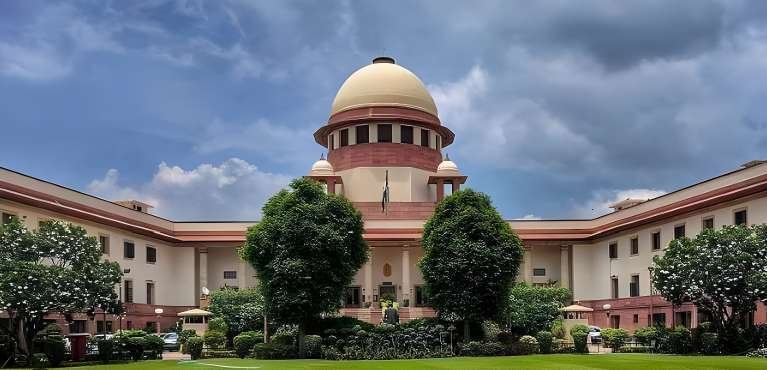
Keywords: ED Probe Halt, Liquor Scam Case, Supreme Court, Chattisgarh, Government Officials
On Tuesday, the Supreme Court directed the Directorate of Enforcement (ED) to suspend the investigation against Yash Tuteja regarding the Chhattisgarh liquor scam. Yash Tuteja is the son of Anil Tuteja, an IAS officer identified by the ED as a key figure in the illegal liquor supply syndicate in Chhattisgarh. Prior to this, the Apex Court had already instructed the agency not to take any coercive measures against Yash Tuteja.
In the order, the Court stated, “Besides the previous directive of no coercive action, the relevant respondent authorities must refrain from taking any action whatsoever.” On Tuesday, the Bench consisting of Justice SK Kaul and Justice Sudhanshu Dhulia issued an order to stay the probe. They further indicated that the same order would extend to the 35 Government officers who are under investigation concerning the same matter.
In its order, the Court emphasized that the concerned respondent authorities must refrain from taking any action whatsoever, in addition to the previous directive of no coercive action. On Tuesday, the Bench, comprising Justice SK Kaul and Justice Sudhanshu Dhulia, issued an order to stay the probe. The Bench further clarified that the same order would also be applicable to the 35 Government officers who are under investigation in connection with the same matter.
During the proceedings, Senior Advocate Kapil Sibal informed the Bench that Government officers were being compelled to disclose their property details despite the absence of any predicate offence. As the Bench was recording the order, Sibal requested the Bench to extend the same relief to the 35 Government officers involved. In response, Justice Kaul stated, “We have already directed to hold their (ED’s) hands in all manner. What more can I say?”
Supporting Sibal’s submission, Senior Advocate Abhishek Manu Singhvi argued that the case lacked a predicate offence, and questioned how the investigation could proceed without one. He pointed out that the complaint was solely filed under the Income Tax Act, which is not a scheduled offence under the Prevention of Money Laundering Act (PMLA). Additionally, the competent court had not taken cognisance of the alleged offence and returned the complaint.
Lisa Gupta, NUSRL, Ranchi, Semester 3, an intern under Legal Vidhiya

