




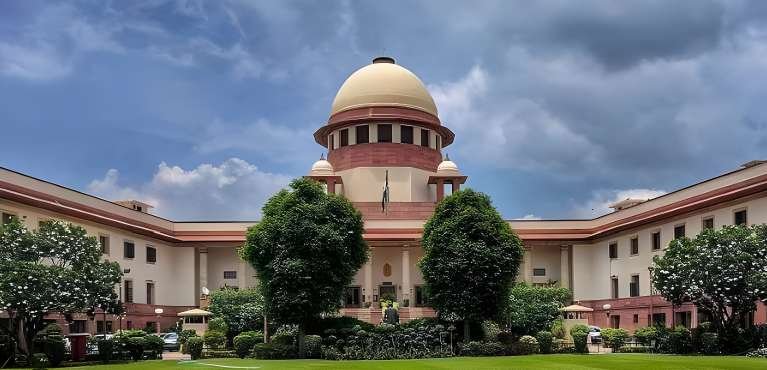
The Apex Court in its decision delivered by a panel composed of Justices S. Ravindra Bhat and Aravind Kumar has mandated the responsibility of the state to give assistance in the form of ‘support persons’ to children who fall victim to sexual violence as per the Protection of Children from Sexual Offences (POCSO) Act 2023. The Court clearly stated that it was not optional to appoint such persons and should not be left for the parents of such children to decide. The jury emphasized on the responsibility of the State to give assistance to POCSO victims and which cannot be viewed as an option.
Bringing out the issues, the petition was brought forth and filed by Bachpan Bachao Andolan, an India-based children’s rights movement who expressed it’s concerns about the POCSO Act’s provision for providing protection to victims.
The court took up a number of writ petitions submitted by “We the Women of India” along with others, and on August 18, 2023, it ordered the state governments to make sure the POCSO Rules 2020 are strictly followed. These rules provided an efficient structure to deliver support systems for child victims, including the hiring of support persons, to lessen their suffering throughout the process of inquiry followed by hearing and finally rehabilitation.
It has ordered the National Commission for Protection of Child Rights (NCPCR) to submit a status report providing details of the progress made by every state in establishing guidelines in accordance with Section 39 of the POCSO Act.
At first, it was proposed that NCPCR make draft copy of the guidelines which could be circulated among every state and after scrutiny and consideration of the draft the finalization of the guidelines may be done.
At the end, the Court highlighted a number of points that the NCPCR should take into account when drafting the guidelines though exhaustive states as follows:
To establish uniformity in standards for educating the support persons, their remuneration, and the time period of their engagement in the project. The creation of a national portal that is easily accessible which lists the names of support persons and finally the responsibility to maintain a panel by each state with respect to NGOs and support persons.
It will take eight weeks to complete the guidelines and submit them to the court.
Written by: Divyani Newar, College name: NEF Law College, 5th Semester, 3 Year LL.B, intern under Legal Vidhiya
References:
- https://www.deccanherald.com/india/support-persons-to-victims-under-pocso-act-cant-be-optional-supreme-court-2727819
- https://www.livelaw.in/top-stories/state-must-provide-support-persons-for-child-victims-under-pocso-act-it-cant-be-left-to-parents-discretion-supreme-court-240188
- https://www.lawinsider.in/news/supreme-court-state-must-provide-support-persons-for-child-victims

