




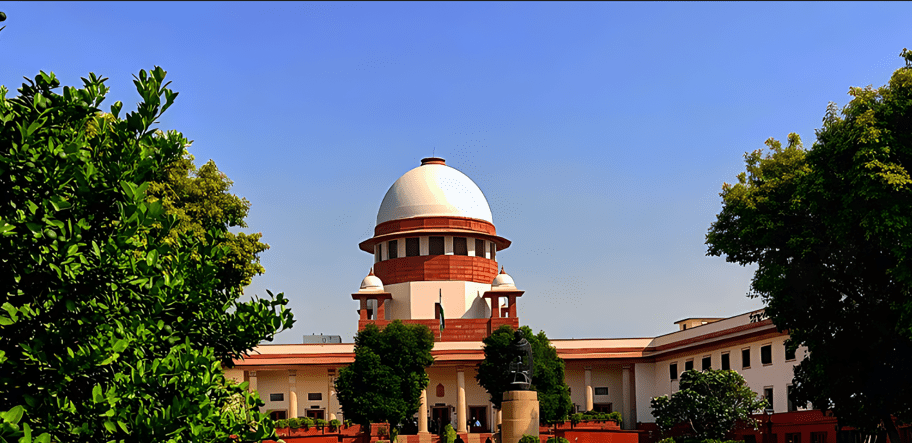
In a significant legal battle that has captured the nation’s attention, the Supreme Court of India has postponed the hearing of a petition challenging the Bihar government’s caste-based survey. The survey, which aims to digitally compile data on each family in the state, has faced fervent opposition, leading to multiple petitions filed before the apex court. The Patna High Court had earlier upheld the survey’s validity, hailing it as a “perfectly valid exercise initiated with due competence.”
However, the contentious decision has ignited debates on constitutional powers, citizens’ rights, and the role of caste in Indian electoral politics. As the case awaits further examination, the controversy surrounding the caste-based survey shows no signs of abating. In a recent development, the Supreme Court of India has adjourned the hearing of a petition filed by non-governmental organization ‘Ek Soch Ek Prayas‘ challenging the caste-based survey conducted by the Bihar government. The Patna High Court had previously upheld the survey’s validity, a decision that has sparked controversy and led to multiple petitions being filed in the apex court.
The division bench of the Patna High Court, in its verdict, rejected the argument that the survey amounted to a census, deeming it a “perfectly valid exercise initiated with due competence.” However, various organizations have contested this decision, claiming that the survey infringes upon citizens’ constitutional rights and encroaches on the Union Government’s authority to conduct a census. The Supreme Court bench, composed of Justices Sanjay Khanna and SVN Bhatti, was scheduled to hear the plea. Still, the hearing was adjourned on the request of Senior Advocate CS Vaidyanathan, citing the absence of another petition challenging the high court’s judgment on the same matter. The court has now re-listed the case for hearing on Monday, August 14.
During the proceedings, another counsel urged the bench for a ‘status quo order,’ but Justice Khanna expressed surprise, stating that no notice had been issued, and the survey was already well underway. The caste-based survey, launched on January 7 by the Bihar government, aims to digitally compile data on each family in the state, from panchayat to district-level, using a mobile application. The objective is to identify and uplift backward classes, scheduled castes, and scheduled tribes, providing them with equal opportunities. The last comprehensive caste-based census in India took place in 1931 under British-led governance. The idea of collecting data based on caste has long been a sensitive topic, given its influence on Indian electoral politics. While the Patna High Court upheld the survey’s validity, the Supreme Court will now have to address the constitutional implications and decide whether the state government’s decision to conduct the caste-based survey is within its jurisdiction or falls under the purview of the Union Government.
The court will also examine the petitioners’ arguments that the survey violates citizens’ rights and contradicts previous Supreme Court judgments. As the matter awaits further deliberation, the controversy surrounding the caste-based survey continues to stir debates on the balance of power and the protection of fundamental rights in India. In conclusion, the Supreme Court’s adjournment of the hearing on the caste-based survey in Bihar marks a critical juncture in the ongoing legal battle.
The Patna High Court’s endorsement of the survey’s validity has triggered a flurry of petitions challenging its constitutional legality and potential infringement on citizens’ rights. As the apex court prepares to take up the case on August 14, the nation eagerly awaits a decision that could shape the landscape of caste-based data collection and its implications on affirmative actions and governance. The controversy surrounding the survey reflects the delicate balance between state and union powers, as well as the ever-persistent question of caste’s role in Indian politics. With the last comprehensive caste-based census conducted nearly a century ago, the issue has evoked contrasting perspectives and ignited fervent debates on identity, dignity, privacy, and individual choice. The final verdict of the Supreme Court will undoubtedly carry far-reaching consequences, setting a precedent for future data collection endeavors and affirming the sanctity of constitutional rights. As the case evolves, all eyes are on the judiciary to strike a balance between social upliftment and the preservation of fundamental principles enshrined in the Indian Constitution.
In a notable legal battle that has garnered national attention, the Supreme Court of India has delayed the hearing of a petition challenging the Bihar government’s caste-based survey. The survey’s objective is to digitally gather data on every family in the state, but it has faced strong opposition, resulting in multiple petitions being presented before the apex court. Previously, the Patna High Court upheld the survey’s validity, describing it as a “valid exercise initiated with competence.” However, this contentious ruling has ignited discussions on constitutional powers, citizens’ rights, and the role of caste in Indian politics. As the case awaits further examination, the controversy surrounding the caste-based survey remains unresolved.
Case Particulars:
Ek Soch Ek Paryas v. Union of India: Diary No. 30965 of 2023
By: Suman Roy, 4th year Student from LJD Law College- University of Calcutta

