




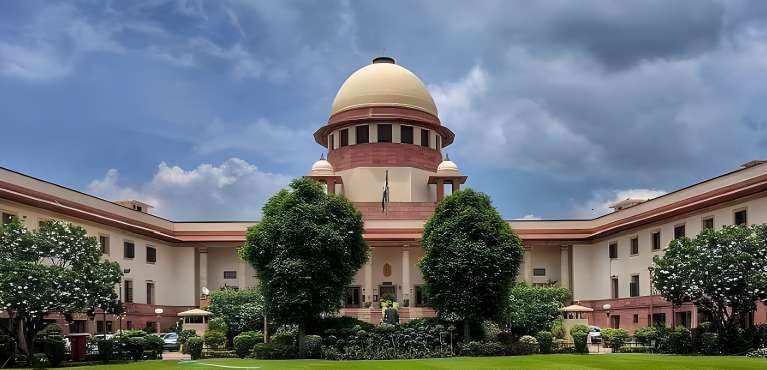
The Law Ministry’s affidavit filed in the Supreme Court months ago, which stated that “citizens belonging to different religions and denominations following different property and matrimonial laws is an affront to the nation’s unity,” is similar to Prime Minister Narendra Modi’s call for a Uniform Civil Code (UCC) in the upcoming election-year state of Madhya Pradesh.
A Supreme Court Division Bench had urged the administration to “endeavour” and bring the unified code in 2019. Although the Hindu law was codified in 1956, it had been mentioned that succeeding administrations had failed to “secure” the UCC for its inhabitants. The court had declared that “despite the exhortations of this court in the case of Shah Bano in 1985, the government has done nothing to bring the Uniform Civil Code” The Shah Bano case, which maintained the right of a Muslim woman to maintenance, was seen as a step towards the UCC’s implementation.
According to the Supreme Court’s ruling in the Jose Paul Coutinho case, “whereas the founders of the Constitution had hoped and expected that the State shall endeavour to secure for the citizens a Uniform Civil Code throughout the territories of India, there has to date been no action taken in this regard.”
Recently, the Supreme Court supported a State Government’s constitutional right to appoint a committee to review the UCC’s implementation. The decision was made in response to a challenge to the BJP-led government of Uttarakhand’s decision to form its own committee to study the UCC.
In order to emphasise the importance of the UCC, the prime minister cited the Supreme Court’s rulings and observations in his speech. He has cited the Opposition’s “vote-bank politics” as the reason for the UCC’s implementation delays.
“Mixing religion with State power is not recognised by and is not permitted by the Constitution. Both need to remain apart. The constitutional directive is that. As long as this Constitution is in place to rule this nation, nobody can claim otherwise. The 1994 ruling had stated that bringing religion into politics would “introduce an impermissible element into the body politic and an imbalance in our constitutional system.”
The Constitution Bench had emphasised how the Constitution required political parties to be “secular in thought and action” in addition to the State.
Political parties are created with the intention of obtaining or sharing state power. Their goal is that. Without political parties, a democratic system of government is impossible to imagine. They are a part of the political structure and legal framework. No, they are essential to a democratic society’s government. Political parties must also adhere to the Constitution’s provision that the State be secular in both thinking and action, the Bombay ruling had stated.
Written By- Aditya Singh, College Name- Army Law College, Pune, Semester- 2nd Semester Student an intern under Legal Vidhya

