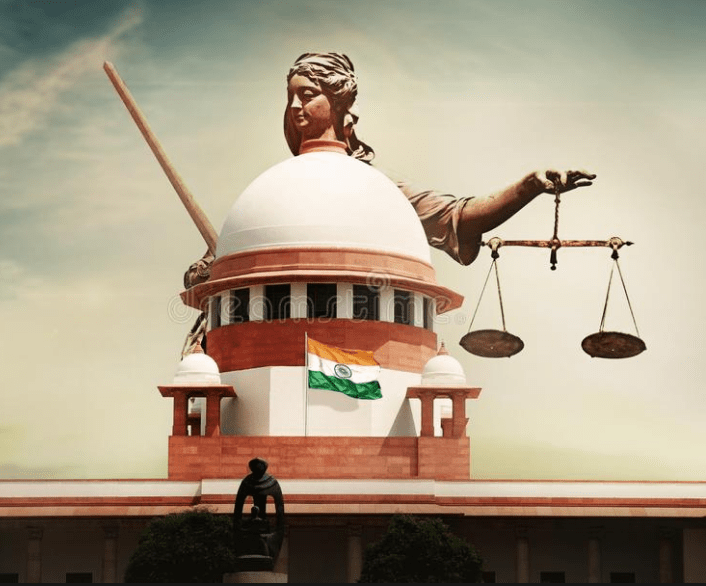
The Gujarat sales tax act 1969, specifies that the penalty and interest imposed under sections 45(6) and 47(4A) are obligatory and must be applied by the COMMISSIONER/ASSESSING OFFICER as prescribed. The Supreme Court with judges M.R SHAH and B.V NAGARATHNA on the bench, have determined that when a dealer is deemed to have not paid taxes to the extent stated in Section 45(5), the penalty under Section 45(6) is automatic and the assessing officer has no discretion to either not impose the penalty or to impose a lesser penalty than what is specified in the provision. The court also emphasized that there is no need to consider any intention on the part of the DEALER/ASSESSE.
The Gujarat High Court’s judgement to dismiss the penalty and interest charges was overturned by the Supreme Court on the grounds that the assessee had previously paid the additional tax levied by the Assessing Officer and had a good faith belief that their tax obligations had been met. The Apex Court concluded that neither of these arguments would support removing the fine and interest that must be paid in accordance with Sections 45(6) and 47(4A) of the Act.
M/S SAW PIPES LTD, the party being assessed, operates in the coal tar and enamel pipe coating works contract business. The company selected to pay a fixed amount of tax under Section 55A of the Gujarat Sales Tax Act, 1969, depositing a 2% tax on sales by categorizing the contract as a civil works contract, as per Entry 1 of the Government of Gujarat’s October 18, 1993 notification.
However, the Assessing Officer (AO) concluded that the pipe coating contract did not meet the criteria of a civil works contract and, as a result, the composition amount paid by the assessee at a rate of 2% was not applicable. Instead, it was classified under the Residuary Entry-8 of the notification.
The AO imposed a penalty and interest on the respondent assessee under Section 45(6) and Section 47(4A) of THE GUJARAT SALES TAX ACT, AND THE INCOME TAX APPELLATE TRIBUNAL (ITAT) upheld this decision upon appeal.
he Gujarat High Court annulled the penalty and interest charges in response to an appeal filed by the assessee, citing that the increased tax imposed by the AO had already been paid by the assessee and that the assessee had a genuine belief that they were only required to pay the tax at a rate of 2%, rather than 12%.
Subsequently, the revenue department appealed the High Court’s decision to the Supreme Court, claiming that the language used in Section 45(6) of the Act, “shall be levied,” and that the same language is used in Section 47(4A) of the Act for interest. The department argued that the assessee was obligated by statute to pay the penalty and interest, and that the High Court had erred significantly in eliminating the penalty and interest on the grounds mentioned above.
The Apex Court recognized that the High Court had withdrawn the penalty and interest charges on the grounds that the assessee did not act with mens rea in failing to pay the tax at the applicable rate of 12%.
The revenue department filed an appeal before the Supreme Court to challenge the High Court’s order. It argued that the language used in Section 45(6) and Section 47(4A) of the Act clearly indicates that the penalty and interest shall be levied, respectively. The revenue department contended that the assessee was legally obligated to pay the penalty and interest, and that the High Court erred in waiving it based on the grounds mentioned earlier.
The Supreme Court observed that the High Court had set aside the penalty and interest levied on the basis that the assessee had no mens rea, or criminal intent, in not paying the tax at the rate of 12%. Referring to SECTION 45(5) OF THE ACT, THE APEX COURT noted that if the amount of tax assessed for any period under certain sections of the Act exceeds the amount of tax already paid by the dealer in respect of that period by more than 25%, then the dealer shall be deemed to have failed to pay the tax to the extent of the difference between the amount assessed and the amount paid.
The court noted that Section 45(6) provides for the levy of a penalty not exceeding 1.5 times the difference of tax specified in Section 45(5) if the dealer is deemed to have failed to pay the tax to the extent mentioned in Section 45(5). The court emphasized that the phrase “shall be levied” is used in Section 45(6), indicating that the penalty leviable under the provision is mandatory and not discretionary. The Supreme Court further stated that the language used in Section 45 is clear and unambiguous, and the legislature’s intention is apparent. According to the court, as soon as an eventuality as mentioned in Section 45(5) occurs, the penalty specified in Section 45(6) becomes leviable. The court pointed out that unlike Section 11AC of the Central Excise Act, 1944, Section 45(6) does not use other terms such as MENS REA or satisfaction of the assessing officer.
The court emphasized that a statutory provision cannot be interpreted in any other way than what is precisely stated, and reiterated the established legal principle that a court cannot read anything into a statutory provision which is plain and unambiguous. The court observed that based on the plain language used in Sections 45 and 47 of the Act, 1969, it can only be concluded that the penalty and interest leviable under these provisions are statutory and mandatory. The Commissioner/Assessing Officer has no discretion to levy or not to levy the penalty and interest except as specified in Section 45(6) and Section 47 of the Act, 1969. The court noted that this interpretation is based on the language and tenor of the provisions.
Accordingly, the court allowed the appeal and set aside the judgment and order of the High Court, restoring the order of the AO.
Written by Vaishnavi Goel (BA.LLB), 6TH Semester, Punjab School of Law, Punjabi University, Patiala