




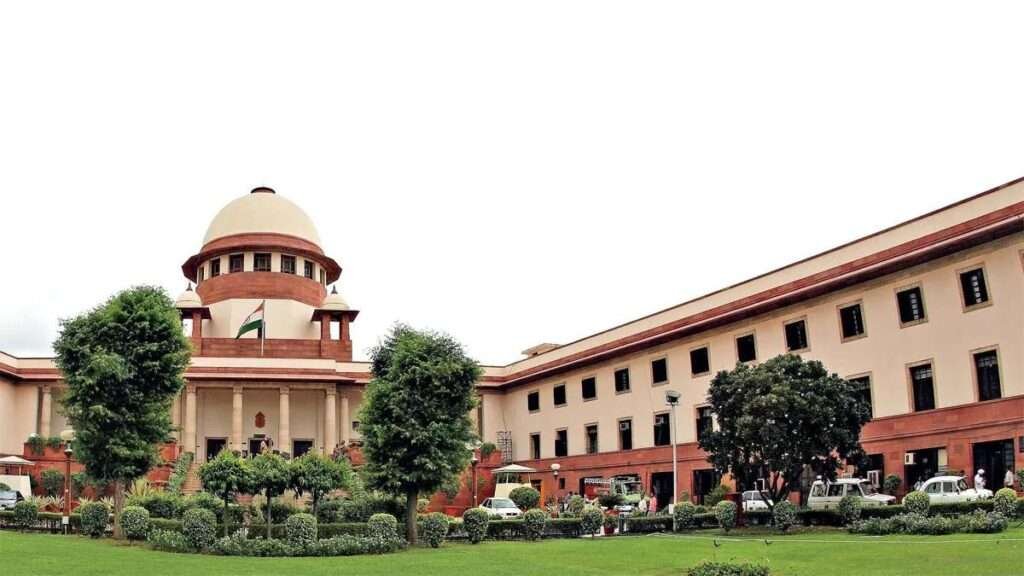
Notices must be sent to both the Central government and the Attorney General of India and they must be returned within four weeks, according to a division bench led by Chief Justice of India, D Y Chandrachud.
The matter is a “sequel” to the Navtej Singh Johar and the Puttaswamy verdicts, according to the senior attorney Mukul Rohatgi who is representing the petitioners. “This is a living issue, not a property issue. Impact is on health, succession. We are only here talking about the Special Marriage Act.” He added.
Notably, nine cases for legalization of same-sex marriage under the Special Marriage Act, Foreign Marriage Act, and Hindu Marriage Act are pending before the Delhi High Court and Kerala High Court.
In representing the petitions before the Kerala High Court, senior attorney Neeraj Kishan Kaul informed the panel about the centre’s notification that it was aiming to transfer each one of the cases to the Supreme Court. He argued that the matter had an impact on fundamental liberties such as gratuity, adoption, same-sex surrogacy and “Even the opening of joint accounts.”
The petition were also represented by senior lawyer Menaka Guruswamy and lawyer Saurabh Kripal.
Suprio chakravarthy and abhay Dang filed the first PIL. They had been together for about ten years, and in December 2021, they had a marriage ceremony where their parents, relatives, and friends blessed their wedding. Now they want the Special Marriage Act to validate their wedding.
Parth Phiroze Mehrotra and Uday Raj Anand, who have been in a relationship for the past seventeen years, Filed the second PIL. they argued that they are now raising two children together, but because they cannot prove their marriage, neither of the petitioners can have a legal parent-child connection with either of their children.
Their argument points out that even though Section 4 of the Special Marriage Act enables any 2 people to solemnise marriage, the subsequent requirements in sub-section (C) therein limit its application to only male and female.
Therefore, they request that any gender- or sexuality-based restriction be removed from the legislation.
The Supreme Court held indisputably in NALSA v. Union of India & Ors. that our constitution protects non-binary individuals and that the protections intended in articles 14, 15, 16, 19, and 21 cannot be constrained to the biological sex of “male” and “female.”
Date: November 25th , 2022
Written by : Lakshman Singh, 3rd Semester B.B.A LL.B (Hons.), Shri Ramswaroop Memorial University, Lucknow

