




The Court likewise passed a progression of rules to be trailed by the middle people while drafting settlement arrangements in marital debates cases.
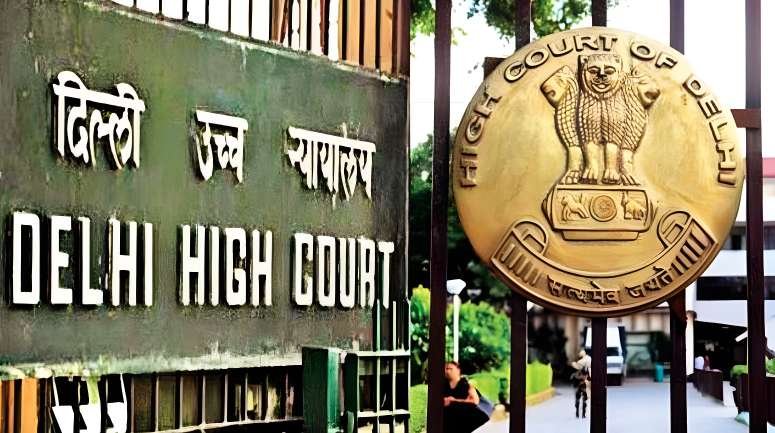
The Delhi High Court as of late coordinated intercession communities in the public cash-flow to guarantee that the intervened repayment arrangements are ready in Hindi beyond what many would consider possible notwithstanding the English [Sh Chhater Buddy and Ors v State and Anr].
Justice Swarana Kanta Sharma stated that she is issuing the order because the parties in the majority of cases do not understand English and speak Hindi as their mother tongue.
“This Court also remains aware that the majority of litigants who approach this Court and the Courts below speak Hindi as their first language… However, the mediated settlement agreements in Delhi are only drafted in English.” The Court stated, “In such a scenario, the settlement agreement and its conditions may not always be sufficiently clear to the parties, and at times, the translation from English to Hindi may not convey precisely what the parties intend to do.”
Justice Sharma stated that she hoped that once the agreements were written in Hindi, wherever it was necessary, it would guarantee not only the agreements’ finality in the mediation centers but also their successful conclusion in the courts.
In an itemized judgment managing an instance of a wedding question, the Court likewise passed a progression of rules to be trailed by middle people in drafting a settlement understanding in marital debates.
The judge stated that the mediator must specify the names of all parties to the agreement when drafting clauses pertaining to criminal proceedings initiated by either side.
In addition, the Court stated that the agreement must include the terms and conditions of the agreement reached between the parties, regardless of how minute or insignificant they may be. It must also avoid ambiguous terms like “respondents” or “petitioners.”
“The timetable for the fulfillment of the terms and conditions as well as how they will be carried out must be made very clear. There ought to be no provisional dates quite far. Justice Sharma stated, “The agreement should include a default clause, and the consequences of that clause should be listed and explained in the agreement itself.”
The judge added that the mode of payment and which follow-up documents must be signed by which party should also be specified in the agreement.
The judge continued, “Further, especially in cases of matrimonial disputes, where one of the conditions in the Agreement is to cooperate in quashing of FIR, such as those under Section 498A IPC, and filing of affidavit and appearing in the Court for the purpose of the same,” adding that “it is advisable that the agreement must stipulate the names of all the parties concerned who have been named in the FIR specifically and the fact that the claims have been settled in totality for
She added,
“It be additionally explained explicitly that the FIR will be subdued in entirety against every one of the people captured, not captured, chargesheeted, not chargesheeted, with their names and whether the whole FIR will be suppressed against every one of them upon installment by spouse or some other individual for the husband.”
The Court also stated that the agreement must specifically mention any criminal complaints or cross-cases filed by the parties, as well as that the agreement must explicitly state that all parties have read and comprehended the settlement agreement in their native tongue.
“On the off chance that only one or a few gatherings are available during intercession procedures and just their marks are gotten on the understanding, it be plainly referenced and explained that the understanding is being endorsed for those family members or gatherings likewise even in the event that they are absent.”
In addition, Justice Sharma stated that the agreement’s language must be precise enough to comprehend the parties’ true intentions and objectives.
The court said that this judgment should be sent to the person in charge of the Delhi High Court Mediation and Conciliation Centre (SAMADHAN) and the person in charge of all of the mediation centers in all of the Delhi District Courts so that they can take note of it and make sure that it is followed.
“A duplicate be likewise sent to Chief (Scholastics), Delhi Legal Institute,” the Court coordinated.
PK Anand, an attorney, represented the petitioners in the case.
Extra Open Examiner Satish Kumar showed up for the State.
For the other respondents, advocates Hiren Dasan, Preeti Chauhan, and Shanta Pandey appeared.
Written by- Archana chandane intern under legal vidhiya


