




Due to rise in the level of noise pollution and it’s complaint, many states have issued guidelines in order to keep an appropriate mark of volume while use of truck DJs.
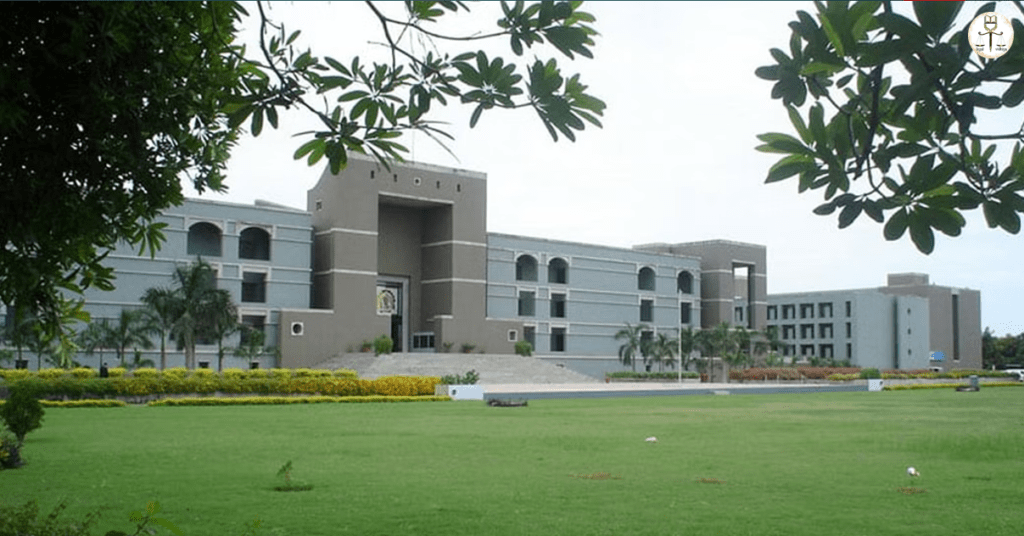
The Gujarat High Court recently issued notice to the State government and the Gujarat Pollution Control Board (GPCB) on a public interest litigation (PIL) petition seeking to curb noise pollution especially the one caused by “truck DJs” which are commonly used in marriages and religious processions.
Recently a report has been released, showing the top and the most affected places by noise pollution in India.
The city of Moradabad in Uttar Pradesh is the second-most noise polluted city globally, according to a recent report by the United Nations Environment Programme (UNEP).
Moradabad has recorded noise pollution of a maximum of 114 decibels (db). The Frontier 2022 report mentions a total of 61 cities.
The highest noise pollution of 119 db has been recorded in Dhaka, the capital of Bangladesh. At third place is Pakistan’s capital Islamabad, where the noise pollution level has been recorded at 105 db.
A division bench of Chief Justice Aravind Kumar and Justice Ashutosh J Shastri sought the response of the State and authorities including the Commissioner of Police, Ahmedabad and also the city’s civic body chief.
“Let this matter be tagged along with the other petitions which raise the issue pertaining to noise pollution due to loudspeakers used in religious places,” CJ Kumar said while adjourning the case.
The bench was hearing PIL filed by one Kaivan Dastoor, an advocate, requested for the compulsory installation of ‘limiters’ in sound systems through which noise pollution could be reduced. This implementation of a notification issued by the GPCB in December 2019.
Petitioner’s Advocate Maulin Yagnik thrown limelight over the impermissibly decibel level of ‘truck DJs’ and even informed the court that he had received an RTI response which disclosed that from January 2021, the Ahmedabad city police received over 10,277 complaints of noise pollution of which only two vehicles were seized by the police.
The PIL Citing several judgements, the petition stated, “Supreme Court has held that no religion prescribes that prayers should be performed by disturbing the peace of others nor does it preach that they should be through voice amplifiers or beating of drums. It is also held that in a civilised society in the name of religion, activities which disturb old or infirm persons, students or children having their sleep in the early hours or during daytime or other persons carrying on other activities, cannot be permitted because in case of student, he/she preparing for his/her examination is entitled to concentrate on his/her studies without there being any unnecessary disturbance.”
The division bench of chief justice Aravind Kumar and justice A J Shastri after briefly hearing the contentions issued the notice to the state. The bench asked the petitioner’s lawyer Dharmesh Gurjar about guidelines prescribing noise pollution rules, he responded that “80 decibel is permissible but the loudspeakers at the mosques create sounds over 200 decibels.”
Many states took initiative to curb noise pollution in their residential areas and issued directions for the control of noise pollution. They even brought out penalties for violating the rules and regulations directed by the state government.
The list of new fines were proposed by the CPCB in a June 12, 2020 report filed with the National Green Tribunal (NGT) in response to a set of ongoing cases over noise pollution.
The Central Pollution Control Board (CPCB) has proposed a new set of fines between Rs 1,000 and Rs 1 lakh for those who violate norms restricting noise pollution under the Noise Pollution (Regulation and Control) Rules, 2000.
The High Court of Punjab and Haryana has explicitly in a latest landmark ruling prohibited the use of loudspeakers in the territory without prior permission from the authorities.
The following suggestions were given for effective implementation of the provisions of law:-
- To make the prevention of noise pollution an integral part of the Swachh Bharat Mission.
- Sensitize people, both the officials and the general public, about the hazardous effects of noise pollution and its ill-effects on human beings, birds and animals as well as nature.
- Sensitize religious institutions, marriage palaces and other noise producing institutions about the adverse impact of noise pollution in the vicinity. In this respect highlighting the Hukamnama issued by Sri Akal Takhat Sahib on use of loudspeakers only within the precincts of a Gurudwara.
- This process of sensitizing the public should be done through an aggressive campaign of 4-6 months through pamphlets, posters, newspapers, electronic media, advertisements, messages through mobile operators, etc., especially by taking the Health Department of the three governments on board.
v) The press and the media should also be requested to highlight the adverse effects of noise pollution.
- The authorities responsible for implementing the laws have to be warned that it is their duty to implement the laws. In this respect, the Chief Secretaries/Advisor and the DGPs should be made responsible for implementation of the law and to ensure that the supporting authorities under the Rules perform their duties effectively.
- As an aid to discharging their functions, the authorities should be equipped with modern noise monitoring devices.
- Each religious institution should be asked to nominate a responsible person to ensure the implementation of the law and in case of any breach, should be held accountable.
- Places which produce noise regularly e.g. Religious institutions, marriage palaces, barred industrial units, etc. should have noise monitoring devices installed to prevent them going above the permissible limit.
Restrictions On The Use Of Loud Speakers/Public Address System And Sound Producing Instruments-
- A loud speaker or a public address system shall not be used except after obtaining written permission from the authority.
- A loud speaker or a public address system or any sound producing instrument or a musical instrument or a sound amplifier shall not be used at night time except in closed premises for communication within, like auditoria, conference rooms, community halls, banquet halls or during a public emergency.
- Notwithstanding anything contained in sub-rule (2), the State Government may subject to such terms and conditions as are necessary to reduce noise pollution, permit use of loud speakers or [public address systems and the like during night hours] (between 10:00 p.m. to 12:00 midnight) on or during any cultural or religious festive occasion of a limited duration not exceeding fifteen days in all during a calendar year] [The concerned State Government shall generally specify in advance, the number and particulars of the days on which such exemption would be operative.]
- The noise level at the boundary of the public place, where loudspeaker or public address system or any other noise source is being used shall not exceed 10dB(A) above the ambient noise standards for the area or 75dB(A) whichever is lower.
- The peripheral noise level of a privately owned sound system or a sound producing instrument shall not, at the boundary of the private place, exceed by more than 5dB(A) the ambient noise standards specified for the area in which it is used.
Delhiites will have to pay Rs 10,000 to Rs 1 lakh for violating noise pollution norms by using loudspeakers without permission or DG sets as the Delhi Pollution Control Committee (DPCC) has asked authorities to strictly implement revised rules.
“For the second violation, the organiser and the owner will have to pay Rs 40,000. For more than two violations within a fixed premises or at a marriage function, the organiser and the owner will have to pay a fine of Rs 1 lakh. The premises will also be sealed,” the DPCC order stated.
Conclusion:
Rapid rise in the level of Noise pollution, the state government has started taking initiatives by issuing various guidelines and directions for the public in order to bring down bumping music, played during the marriage and other religious speakers to reduce the affect on the society’ health.
By following the steps, public could really contribute in the society and help government policies and rules implemented and executed in proper and effective manner.

