




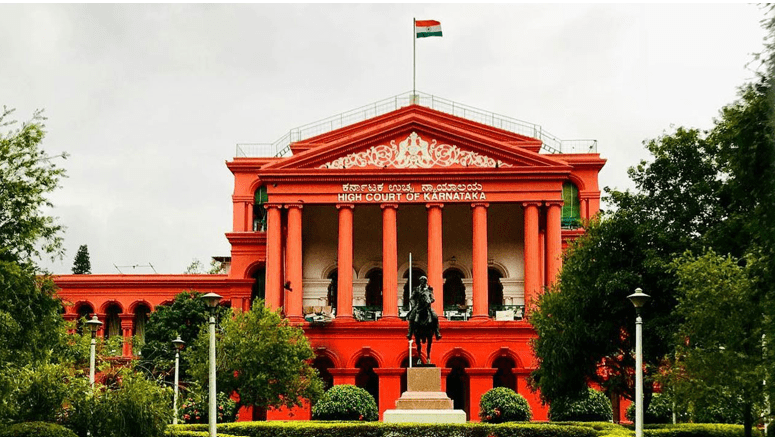
The Court emphasized that just because they were chosen as election officers doesn’t give them the right to act before the results are announced.
Election officials do not have the authority to conduct search and seizure operations prior to the declaration of elections, according to a recent ruling by the Karnataka High Court [Ishtiyak Ahmed v. Election Commission of India].
Justice M. Nagaprasanna emphasized that just because someone is appointed as an election officer doesn’t give them the right to act before the results are announced.
“Prior to the announcement of elections, the Returning Officer or election officials would not have any authority to search or seize any materials. They cannot use the said power prior to the declaration of elections simply because they were appointed as officers for the conduct of elections, according to the Court.
Ishtiyak Ahmed was asking the court to order the release of 530 bags of rice that election officials had taken from him.
The petitioner identified herself as a prominent social worker who actively participates in charitable endeavors like food distribution. He asserted that on March 19, 2023, 530 bags of rice were taken from him by the returning officer and a police inspector. The rice bags were not given back to the petitioner despite the fact that he provided an explanation in response to the notice that was sent to him the following day.
For the past fifteen years, according to petitioner’s attorney Syed Ummer, he has given away rice to those in need on all major holidays. He requested a directive for the bags’ release after arguing that the authorities had no right to seize the bags in the first place.
The petitioner had hoarded the bags for distribution to voters in the Karnataka Assembly election, according to Central Government Counsel SR Dodawad for the Election Commission (EC), who defended the officials’ actions.
He acknowledged that the election date had not yet been made public and that the officials lacked the right to search and seize anything prior to the election.
The Court pointed out that the election had not been informed when the seizure was made. It also stated that the petitioner had submitted all supporting documentation after receiving notice, but his rice bags had been rejected.
The Court emphasized that, even though seizure may be used after election results are announced, it is typically only permitted in situations where the Essential Commodities Act of 1955 is being followed. It was emphasized that while seizure may be used following the announcement of election results, it is typically only allowed in circumstances where the Essential Commodities Act of 1955 is being complied with. The Court determined that because the officials lacked the necessary authority, their actions were illegal.
The entire domain would be accessible following the announcement of the results, but not beforehand. According to the Essential Commodities Act of 1955, officers have the authority to seize under normal circumstances. The Returning Officer and the Inspector of Police, who conducted the search in the case at hand were not vested with such authority and their action is therefore, illegal, the Court made it clear.
Nevertheless, despite the Court’s opinion that the seizure lacked jurisdiction, it was still declared to be current.
Therefore, it instructed the petitioner to hold off on dispersing the bags until after the elections.
Written By- Tushar Vashisth students of 3rd year BBA LLB at Chandigarh University


