




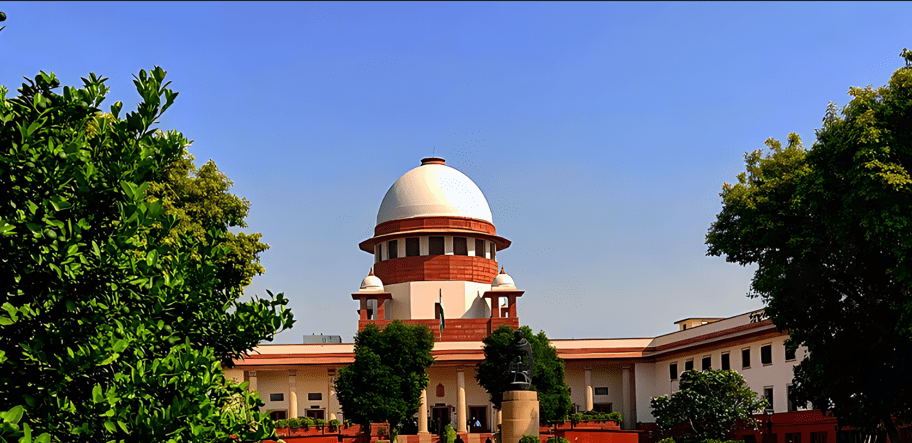
A five-judge strength constitution bench led by CJI DY Chandrachud began hearing several petitions today that contest the Centre’s decision to repeal Article 370 on August 5, 2019, a move that was vehemently criticized by some significant opposition parties but enthusiastically praised by those who support the BJP.
The lead attorney for the petitioners, senior attorney Kapil Sibal, was asked by the panel of judges, which also included Justices Sanjay Kishan Kaul, Sanjiv Khanna, BR Gavai, and Surya Kant, how a provision (Article 370), which was explicitly referred to in the Constitution as a temporary provision, could become permanent after the Jammu and Kashmir constituent assembly’s term ended in 1957.
The judges questioned the petitioners who have challenged the abrogation of the constitutional provision that bestowed upon the unique status of the erstwhile state: Who can recommend the revocation of Article 370 in Jammu and Kashmir when no constituent assembly exists there?
The top court referred to provision 3 of Article 370, which says, “Notwithstanding anything in the foregoing provisions of this article, the President may, by public notification, declare that this article shall cease to be operative or shall be operative only with such exceptions and modifications and from such date as he may specify: Provided that the recommendation of the Constituent Assembly of the State referred to in clause (2) shall be necessary before the President issues such a notification.”
The CJI asked Sibal, “What happens when the tenure of constituent assembly ends? No constituent assembly can have an indefinite life. Clause (3) of Article 370 refers to the recommendation of the state’s constituent assembly, and it says before President issues notification, the recommendation of the constituent assembly is required. But what would happen when the constituent assembly ceases to exist?”
The president cannot issue any notification abolishing Article 370 without consulting the constituent assembly, Mr. Sibal retorted, stating that this was precisely their argument. When the Jammu and Kashmir constituent assembly’s term ended in 1957, Justice Gavai intervened and questioned the senior attorney if the claim was made that nothing could have been done about Article 370 after that point.
Mr. Sibal said the court is currently interpreting a constitutional provision, and it is not here to legitimize the process, which is unknown to the Constitution. “Through a political act, Article 370 was tossed out of the window. This was not a constitutional act. Parliament took upon itself the role of constituent assembly and revoked Article 370, saying it is exercising the will of the people of Jammu and Kashmir. Can such a power be exercised?” said Mr. Sibal contesting the way Article 370 was repealed.
The result of the hearing remained inconclusive, and hearings with respect to this issue, will be continued on Thursday.
Written by A.Sameeksha, 3rd semester, Symbiosis Law School Hyderabad, intern under Legal Vidhiya.

