




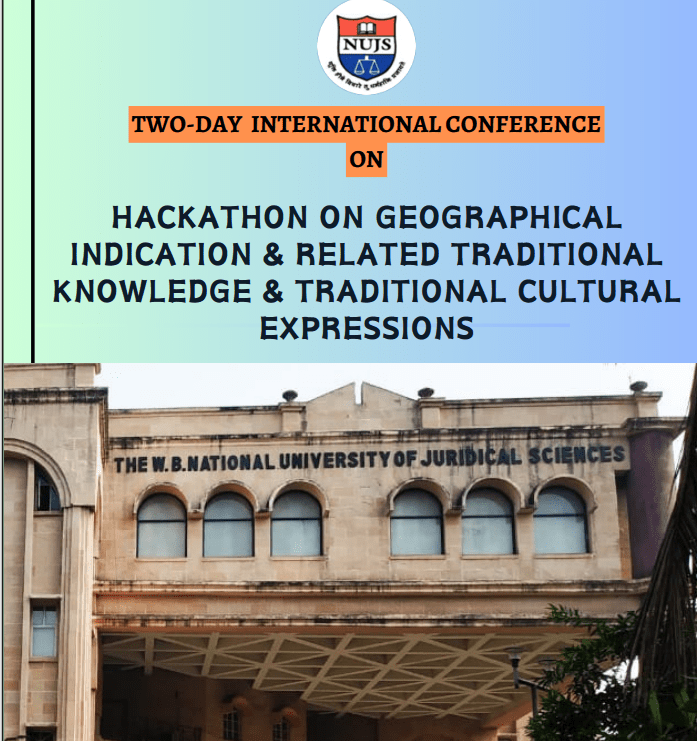
About the Conference
There are several IPR conferences that include Geographical Indications (GI), Traditional Knowledge (TK) and Traditional Cultural Expressions (TCEs) as subthemes. However, dedicated conferences in these areas are quite rare.
There are various reports by the Food and Agriculture Organization (FAO) of UNO showcasing the importance of these subjects, particularly of GIs, in the sustainable development of vulnerable sections of the society. Not only that, the main objective of developing countries such as India, behind adopting GI law was to preserve their cultural heritage from exploitation and unfair competition.
Similarly, various traditional knowledge and traditional cultural expressions require extensive efforts to be recognized, promoted, and preserved, for which these TK and TCE require comprehensive guidelines from policymakers. However, when it comes to enforcing and implementing GI laws in spirits, there are various scholarly papers showcasing the inefficacy of respective GIlaws. At the grassroots level, there are several gaps in the enforcement of GIs and the management and documentation of TK and TCEs.
About WBNUJS
The West Bengal National University of Juridical Sciences was established under the WBNUJS Act, 1999 (West Bengal Act IX of 1999) adopted by the West Bengal Legislature in July, 1999. The University was notified under Clause (f) of Section 2 of the UGC Act, 1956 in August 2004 and has been granted permanent affiliation by the Bar Council of India in July 2005.
About DPIIT IPR Chair
Established a Central Scheme of Intellectual Property Education, Research and Public Outreach (IPERPO) under which DPIIT IPR Chairs were set up. After that, the Department for Promotion ofIndustries and Internal Trade (DPIIT), Ministry of Commerce and Industry, Government of India, launched a Scheme for Pedagogy & Research in IPRs for Holistic Education & Academia (SPRIHA) in the year 2016 under which DPIIT IPR Chairs have been set up in select universities and academic institutes.
Who can attend?
Policymakers, Professionals, Scientists, Academicians, Researchers, undergraduate and Post-graduate Students, Doctoral Candidates.
Sub-themes
- The GeographicalIndication and international relations
- Existing legal dilemmas and Geographical indications
- Individual rights and community rights- a dilemma of Geographical indications
- Management of supply chain in Geographical indications products
- The post-registration regulation of geographical indication
- Marketing and commercialization of Geographical indications
- Technology, innovation, and Geographical indications
- The protection, preservation, and promotion of TK and TCEs
- Management and documentation of Traditional Knowledge and Traditional Cultural Expressions
Important dates
- Last date for Abstract Submission: 20th January, 2024
- Acceptance of Acceptance: Acceptance of abstract will be acknowledged within seven (7) days
- Last date for submission of full paper: 25th February, 2024
- Last date of registration: 31st January 2024
- Date of Conference: 9th-10th March, 2024
Guidelines
- Only one submission is allowed per author.
- Co-authorship to a maximum of three authors is permitted. In the case of co- authors, a separate registration form shall be sent for each.
- Only original papers will be considered for the conference. No part of it should have been published earlier anywhere else, nor should it be under consideration for publication or a contest elsewhere.
- Any form of plagiarism will result in disqualification.
- Identification mark of the author, or the affiliated institution (if any) should not be found in any part of the essay.
- Abstracts of not more than 300 words, for original research papers on the above- mentioned themes are invited, submitted as Word document, with a brief bio of 200 words along with one photograph.
- The full-length research paper should be within 8000 words (including footnotes).
- Potential contributors are required to adhere to a uniform mode of citation (20th edition of The Bluebook: A Uniform System of Citation is recommended).
- All abstracts/papers must be written in Times New Roman with font size 12 with 1.5 line spacing.
- Footnote font size 10 without spacing.
How to Register?
Interested candidates can register via the link given at the end of the post.
Registration Fee
- Students: Rs. 500/-
- Research Scholars: Rs.1500/-
- Academicians: Rs. 2000/-
- Professionals: Rs. 3000/-
- Foreign Delegates: Rs. 4000/-
For further inquiry mail at iprchair@nujs.edu
Click here to Register.

