




Keywords – Supreme Court, Unstamped arbitration agreements, Curative petition, Chief Justice of India (CJI), Legal precedent Arbitration law
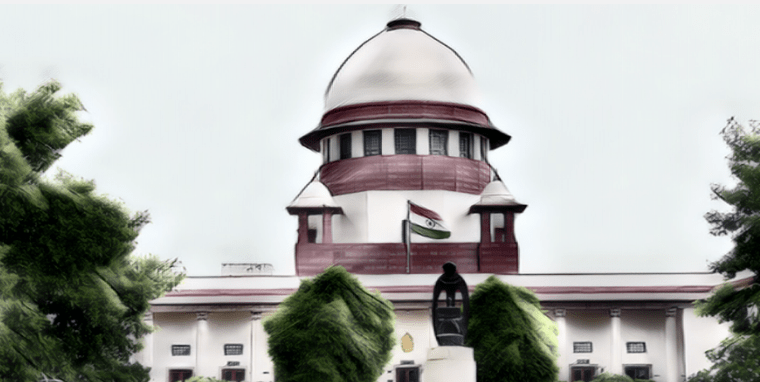
New Delhi, September 13, 2023 – In a significant development, the Supreme Court of India has announced its intention to hear a curative petition concerning the enforceability of unstamped or insufficiently stamped arbitration agreements. Chief Justice of India, DY Chandrachud, presiding over a 5-judge bench, indicated that the petition could be heard as early as next week. In a notable move, CJI Chandrachud also extended an invitation to specialized lawyers well-versed in arbitration law to assist the court in addressing this pivotal legal issue, regardless of whether they represent any of the involved parties.
The distinguished bench, comprising Justices Hrishikesh Roy, PS Narasimha, Pankaj Mithal, and Manoj Misra, had initially convened to deliberate another critical matter related to the Arbitration and Conciliation Act of 1996. Specifically, they were considering whether an individual ineligible for appointment as an arbitrator could nonetheless designate one. During these proceedings, CJI Chandrachud made the announcement regarding the forthcoming curative petition pertaining to arbitration agreements and stamping.
The Chief Justice of India (CJI) indicated that the court was contemplating the possibility of taking up the curative petition related to registration and stamping at some point, with a potential listing for next week. The court expressed its openness to receiving assistance from interested parties, regardless of their involvement in the case. Those desiring to present their perspectives were advised to contact the court master, who would provide information about the hearing date. Additionally, the CJI acknowledged the involvement of various other laws, including the Stamp Act, and emphasized the court’s intent to conduct a comprehensive review to establish legal clarity. The CJI also encouraged individuals to bring forth any pertinent points for consideration that might necessitate a referral to a larger bench.
This development comes on the heels of a recent decision by a 5-judge panel, also presided over by CJI Chandrachud, which agreed to hear a curative petition in open court. The petition concerns the enforceability of arbitration clauses in agreements that are required to be properly stamped but fall short of the requirement. The 2020 judgment by a 3-judge bench had held that such arbitration clauses were not sufficiently stamped and, therefore, not enforceable by the court.
In April of this year, a Constitution Bench, comprising Justices K.M. Joseph, Ajay Rastogi, Aniruddha Bose, Hrishikesh Roy, and C.T. Ravikumar, answered the reference on this issue by a 3:2 majority. The majority’s decision clarified that an instrument lacking the appropriate stamp duty could not be considered a legally enforceable contract under Section 2(h) of the Contract Act.
Justice Rastogi and Justice Roy, in the minority opinion, contended that non-stamping or insufficient stamping of the substantive instrument would not render the arbitration agreement unenforceable. They argued that stamp deficiency could be considered a curable defect and should not void the arbitration agreement.
In addition to the arbitration-stamping issue, the court has been deliberating whether an ineligible person can appoint an arbitrator. Previously, the court had deferred this matter for two months, citing the formation of an expert committee to review India’s arbitration laws. During the recent proceedings, Attorney General for India, R Venkataramani, informed the court that the review process was ongoing and requested further deferment. CJI Chandrachud accepted this request, stating, “The committee, headed by Dr. T.K. Vishwanathan, Former Secretary of the Department of Legal Affairs, was constituted by the Ministry of Law and Justice on June 14, 2023.”
The legal community and stakeholders eagerly await the Supreme Court’s decision on these critical arbitration issues, which have far-reaching implications for contract enforceability and dispute resolution in India. With the curative petition on arbitration-stamping set for an expedited hearing, the stage is set for an in-depth examination of the law’s intricacies and its potential impact on businesses and individuals alike.
Written by- Shuniti Sinha, College name – Brainware University , Semester- 7th, an intern under Legal Vidhiya

